Egypt travel with limited mobility mainly needs three things: good planning, honest information, and tours that do not just sound nice, but actually feel comfortable in real life. Because many travellers with mobility limitations do not have the problem that they want to see or do less. The real problem is often that, before booking, it is not explained clearly enough how tiring, how long, or how practical an excursion really is.
That is exactly why this topic matters so much. For many people, Egypt is a destination that instantly creates big images in the mind: sea, sunshine, boat trips, desert, temples, pyramids, and that very special mix of relaxation and history. At the same time, many people also ask very practical questions: Which tours actually feel good with limited mobility? What is realistically manageable? And how do you plan in a way that keeps the holiday enjoyable instead of unnecessarily exhausting?
The good news is this: even with limited mobility, it is absolutely possible to enjoy beautiful, relaxed, and memorable excursions in Egypt. The key point is simply choosing the right tour. Not every excursion fits equally well. Some days look wonderful in photos, but in reality include lots of stairs, long walks, uncomfortable transfers, or not enough breaks. Other tours are much more pleasant, calmer, and easier to plan, but may not look quite as dramatic online at first glance.
That is exactly what this article is about. Not about pretending everything is easy, and not about acting like every tour automatically works. It is about planning Egypt travel with limited mobility in a realistic, helpful, and relaxed way. Because a good holiday often does not depend on doing as much as possible. It depends on finding the tours that truly fit your own pace, energy, and personal needs.
Why Good Planning Matters So Much for Egypt Travel with Limited Mobility
With Egypt travel with limited mobility, good planning often makes the biggest difference of all. Not because travelling has to become complicated, but because a beautiful excursion usually depends less on how famous a place is and more on how well the day matches your own pace and physical comfort.
That is exactly where the real problem often lies. Many tours are described online in a very general way. You read things like “beautiful day trip,” “impressive sights,” or “unforgettable experience.” What is often missing are the details that actually matter for travellers with mobility limitations: How much walking is there? Are there stairs? How long is the transfer? Are there long stops without somewhere to sit? Does the day feel relaxed or tightly packed and tiring?
That is exactly why planning matters so much. If you know in advance what an excursion really looks like, you can judge far better whether the day will feel comfortable or whether it will push you too close to your limits. With Egypt travel with limited mobility, the most spectacular tour is not automatically the best one. Often, the better choice is the one that feels calm, manageable, and still special.
Another important point is the heat. In Egypt especially, this plays a much bigger role than many people first expect. A trip with strong sun, long walking distances, and little shade can feel completely different from the same tour in winter or with a better day structure. For many travellers with limited mobility, it is not only the destination itself that matters, but also the question of how demanding the whole day feels physically.
The difference between a group tour and a private tour can also be huge. A private tour is often easier to adapt, calmer, and better suited to breaks or individual needs. A group tour may be cheaper, but it can also feel much more rigid. With Egypt travel with limited mobility, these kinds of decisions often matter even more than the place itself.
In the end, good planning does not make the holiday more complicated. Quite the opposite. It often makes the trip feel lighter, safer, and genuinely enjoyable. Because anyone who honestly looks at what feels comfortably manageable and what probably does not usually has a much better chance of creating exactly the kind of holiday that feels like a holiday, not like hard work.
Which Types of Tours in Egypt Often Feel More Comfortable with Limited Mobility
With Egypt travel with limited mobility, the most comfortable tours are usually not the ones that look most spectacular in photos, but the ones where the pace, distances, and structure are easier to manage. That is exactly why it helps to sort excursions not only by destination, but by how physically demanding they are.
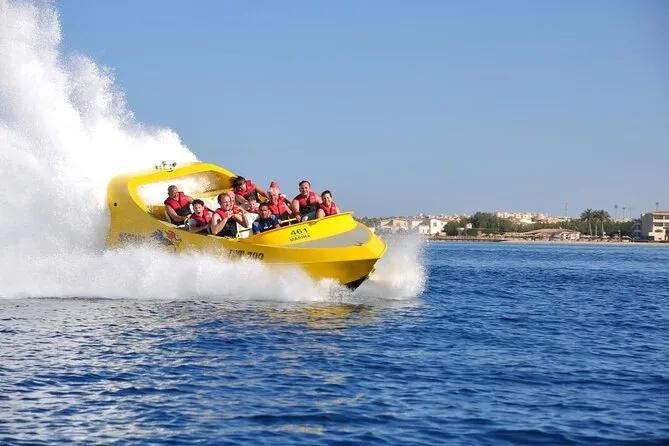
Often, calmer boat trips are one of the easier options. A relaxed day at sea with beautiful views, comfortable seating, an easy pace, and enough breaks feels much lighter for many people than a full cultural day trip with long transfers and a lot of walking. Smaller or private boat excursions can be especially good here, because they are often more flexible and do not follow such a tight group rhythm.
Private tours are also often more comfortable than classic group tours in the context of Egypt travel with limited mobility. Not necessarily because the destination is different, but because the day is often easier to adapt. More breaks, a slower pace, less pressure, and the option to shorten or skip parts of the programme can make a much bigger difference than many people first realise. What might feel too much on a standard group tour can suddenly feel much more manageable when done privately.
Tours where the experience does not depend mainly on walking are also often easier. A beautiful boat day, a calm sightseeing drive, a shorter private trip, or a day with several opportunities to sit and rest often suits people much better than tours that require a lot of standing, climbing stairs, or walking on uneven ground. In Egypt especially, that matters because heat, sun, and long transfers can all use up extra energy.
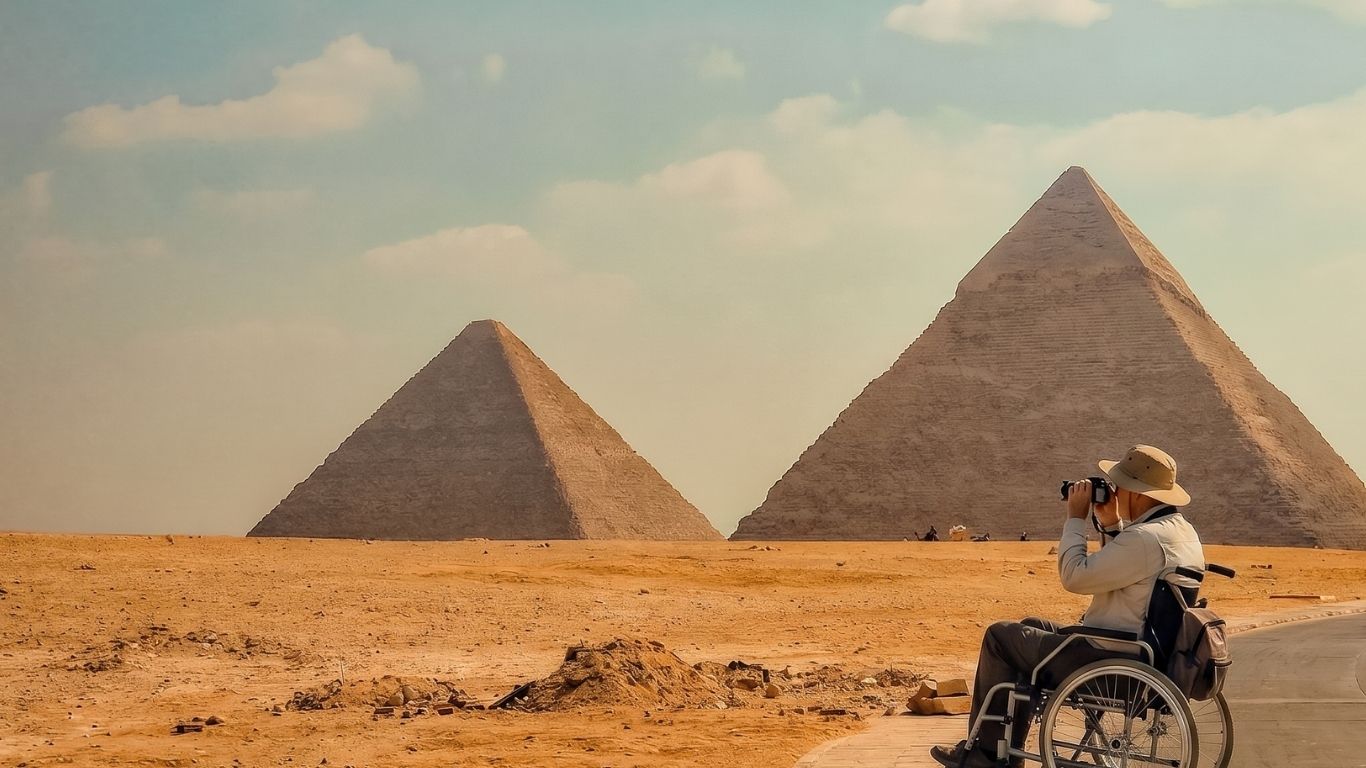
It often makes sense to be more careful with big, packed full-day tours. That does not mean Luxor, Cairo, or the pyramids are automatically impossible. But these trips often feel much more intense because several demanding factors come together at once: early departures, long road transfers or flights, a full schedule, major sights, and sometimes long walking distances. With Egypt travel with limited mobility, these trips often work best when they are private, simplified, or assessed very realistically in advance.
Desert safaris are also a more individual question. A calm jeep excursion may still feel manageable for some people if the day is not too rough, too long, or too focused on speed. Quad or buggy tours, on the other hand, are often much more physical, dustier, and more tiring. That is exactly why it helps not to ask only which excursion is popular, but which one will actually feel comfortable and realistic.
In simple terms, the tours that often feel better with Egypt travel with limited mobility are calm boat trips, private tours, flexible day excursions, and experiences with lots of sitting time and very limited walking. More difficult are usually tours with many stairs, long distances, tightly packed schedules, or strong physical effort. And that difference is often exactly what decides whether a day feels like a lovely holiday outing or simply too much.
Which Excursions in Hurghada Often Work Well for Travellers with Limited Mobility
Within Egypt travel with limited mobility, Hurghada is for many people a comparatively good base because it offers many different types of excursions, and not every enjoyable holiday day automatically involves long walks, temple steps, or a tightly scheduled programme. That is why it makes sense to look more closely at which excursions in Hurghada often feel more comfortable and realistic.
Often, calmer boat trips work well. That is mainly because a large part of the day takes place seated, with good views and a relaxed atmosphere. Of course, it is always important to be honest about what boarding the boat is actually like and how easy the access really is. But in general, many boat days feel easier than excursions where you spend long periods on your feet. For many travellers with limited mobility, exactly this combination of sea, calmness, and predictable breaks is very helpful.
Private boat tours can feel especially pleasant. Not because the sea is different, but because the schedule is often more flexible. The pace can be adapted more easily, breaks can be built in more naturally, and there is less pressure to keep up with a larger group. In the context of Egypt travel with limited mobility, that is often a real advantage because the day feels less like a fixed programme and more like an actual holiday.
Calmer city outings or shorter private day trips around Hurghada can also work well if they do not involve too much walking. Some travellers do not want to stay only at the hotel, but they still want to keep the day physically manageable. That is where excursions with good transport, places to sit, and a slower pace can be a very good fit.
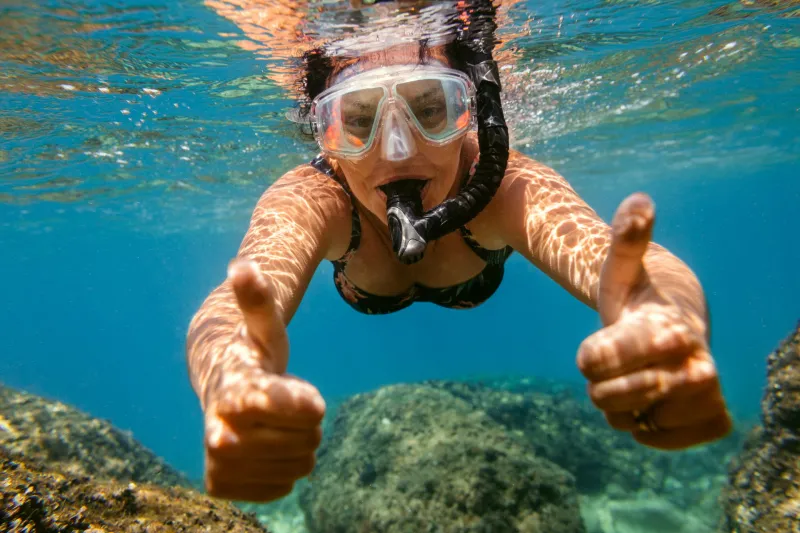
It makes sense to be a little more careful with snorkelling and island trips. They can be wonderful, but not every one automatically works equally well. The deciding point is often not the tour itself, but how easy it is to get onto the boat, into the water, and back again. For some travellers, an island stop with a short stay and a lot of boat time can work perfectly well. For others, the getting on and off is already too difficult. That is why, with these kinds of trips, it is especially important to look closely at the day structure.
Desert safaris are usually a much more personal decision. A calm jeep tour may still feel manageable for some people if the route is not too rough, too long, or too speed-focused. Quad and buggy tours, by contrast, are often less suitable for travellers with limited mobility because they involve more physical effort, more jolting movement, and more strain overall.
With bigger cultural trips like Luxor or Cairo, it depends very strongly on the person and how the day is planned. These tours may be possible, but they usually need to be judged much more realistically than a boat day in Hurghada. A lot depends on how long the transfers are, how much walking is involved at the sites, and whether the excursion can be adjusted privately. For some people, that works well. For others, it is simply too much for one day.
In short, in Hurghada the excursions that often fit best for travellers with limited mobility are calmer boat trips, private boat tours, flexible private day trips, and outings with plenty of sitting time and little walking. More caution is often needed with island stops that have difficult access, desert tours with a lot of jolting movement, and large cultural trips with long walking distances. That is exactly why, in Egypt travel with limited mobility, it is not only the destination that matters, but above all how comfortable the journey there and the whole day structure really feel.
Which Questions You Should Definitely Ask Before Booking
With Egypt travel with limited mobility, a nice tour description is often not enough. The practical details matter much more. That is exactly why it is worth asking very specific questions before booking. Not because you are being difficult, but because those details are often exactly what make the excursion later feel truly comfortable instead of unexpectedly hard.
One of the most important questions is always: How much walking is really involved? Many excursions sound short and easy in the description, but feel completely different on the day. A “small walk” may be absolutely fine for one person and far too much for another. That is why it helps to know as clearly as possible whether the tour involves only a few steps, longer walking distances, uneven ground, or places where you have to stand for quite a while.
The question of stairs and access matters just as much. With boats, island stops, temples, or older sights, this can make an enormous difference. With Egypt travel with limited mobility, it helps to know very clearly: Are there stairs? Are there handrails? Is the access steep? Do you have to climb onto a boat, or is it relatively easy to board? Details like these often shape the whole day more than the destination itself.
The transfer is another major factor. Many people first think only about the attraction itself, but the strain often starts much earlier. How long is the drive? Are there breaks on the way? Is the vehicle comfortable? How easy is it to get in and out? Especially on longer excursions to Luxor or Cairo, this can be almost as important as the destination itself.
Another important question is: How flexible is the schedule? Can extra breaks be added? Is the tour private, or does it follow the rhythm of a larger group the whole time? Is there any possibility of shortening some parts or skipping them? With Egypt travel with limited mobility, exactly this kind of flexibility is often incredibly valuable, because it can turn a potentially exhausting day into a much more comfortable excursion.
It is also worth asking about seating and toilets. That may not sound exciting, but in real life it matters a great deal. Are there enough chances to sit down during the day? Are toilets available within reasonable distance? Especially in heat, on long days, or with limited stamina, these details often decide whether something feels comfortably manageable or simply too much.
The most helpful questions are often:
How much walking is really involved?
Are there stairs or uneven surfaces?
How long and how comfortable is the transfer?
Is the tour private or organised as a group?
Can breaks be added flexibly?
Are there seats and toilets available during the day?
How does getting on and off boats or vehicles actually work?
In the end, with Egypt travel with limited mobility, the clearer your questions are before booking, the more relaxed the day often becomes later. It is not about making things complicated. It is about choosing the tour in a way that keeps it genuinely comfortable, realistic, and enjoyable.
Which Tours Can Be More Difficult and Why Honesty Matters So Much Here
With Egypt travel with limited mobility, it is just as important to know which tours may be more difficult as it is to know what works well. Not because the aim is to speak negatively about anything, but because the holiday should stay enjoyable instead of turning into unnecessary strain. In exactly this area, honesty often helps more than any beautifully written sales description.
One of the more challenging types of excursion is often the long, very full cultural day trip. This especially includes trips to Luxor or Cairo when done as a fixed group tour with a tight schedule. These excursions can be beautiful and deeply impressive, but they often combine several demanding elements at once: very early departures, long transfers, many programme points, sometimes uneven ground, larger crowds, and only limited opportunities to truly adapt the pace. For some travellers, that is manageable. For others, it is simply too much for one single day.
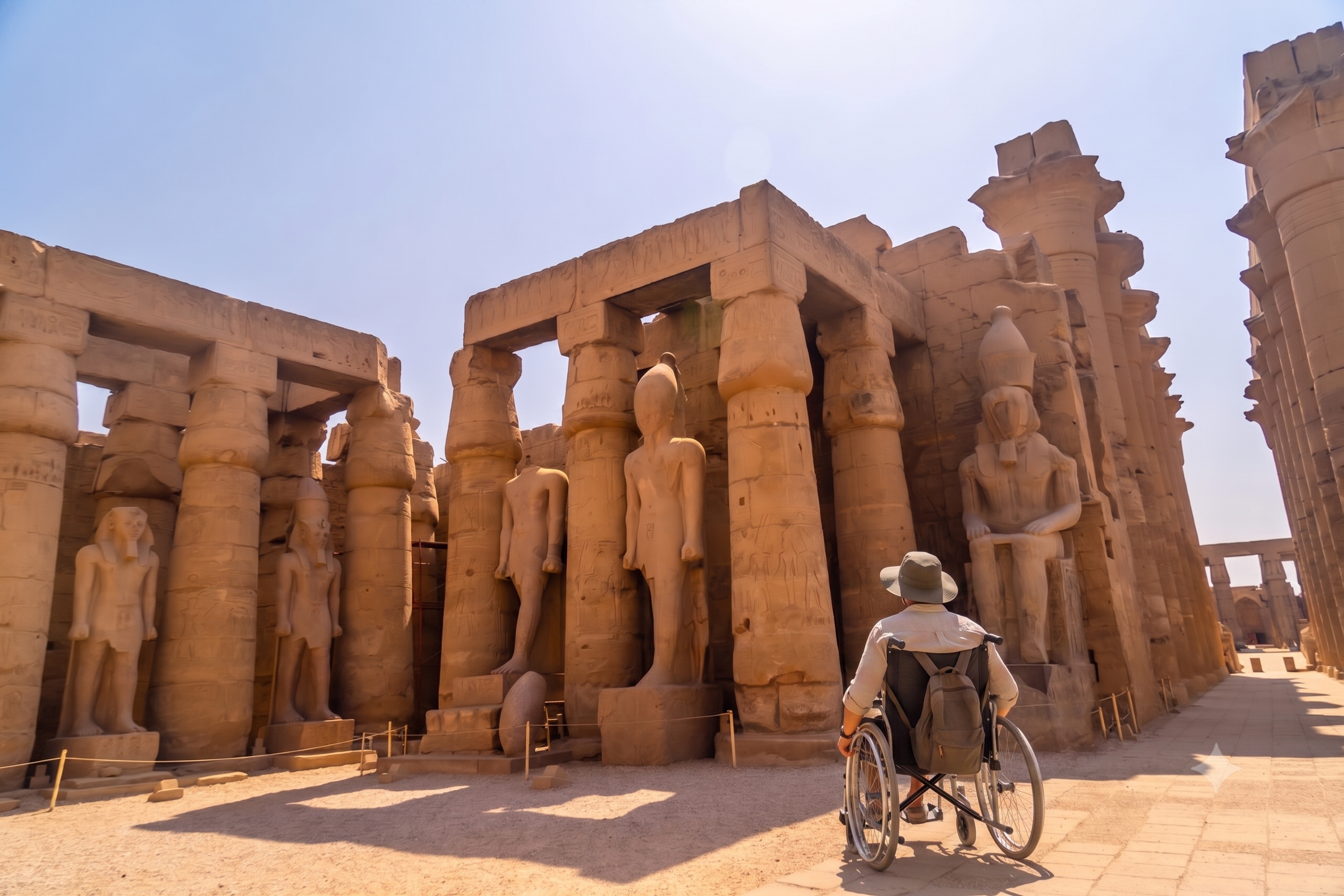
Even the historical sites themselves can feel more demanding than they look in pictures. Temple areas, pyramid zones, or old pathways often look open and easy to walk in photos, but feel very different in reality. Sand, stones, uneven surfaces, longer distances, and little shade do not automatically make a place impossible, but they often make it much more tiring than expected. With Egypt travel with limited mobility, it is therefore not only important to think about what you want to see, but also what the surfaces, walking paths, and rest options are really like.
Island and snorkelling excursions can also be more difficult when access to the boat or water is complicated. Many people first think of relaxation when they imagine a boat trip, and that can absolutely be true. But if boarding means climbing steeply, crossing unstable gangways, or moving onto the boat without good support, the day quickly stops feeling as light as it sounded. That is exactly why these tours should never be judged only by the beautiful destination, but also by the practical access.
This is even more obvious with quad and buggy safaris. These tours are usually more physical, bumpier, dustier, and more exhausting overall. For some travellers, even a jeep safari can already be difficult if long sitting times, jolting movement, or getting in and out becomes hard. That does not mean every desert tour is automatically impossible. But it does mean that this is the area where it is especially important to be honest about your body, your energy, and the kind of comfort you actually need.
And that is exactly why honesty matters so much. With Egypt travel with limited mobility, it helps nobody if an excursion is sold as “no problem at all” when in practice it includes lots of stairs, long walking distances, or a stressful pace. At the same time, it also does not help to assume too quickly that nothing is possible. The truth is usually somewhere in the middle: many experiences can be beautiful and manageable if the right tour is chosen and the level of strain is assessed realistically.
In the end, honesty does not mean giving up on experiences. It usually means choosing them in a way that keeps the day from feeling like something you only “managed somehow,” and instead makes it feel like a genuinely good holiday day. And with Egypt travel with limited mobility, that is often worth far more than any individual programme point that only gets completed with a lot of effort.
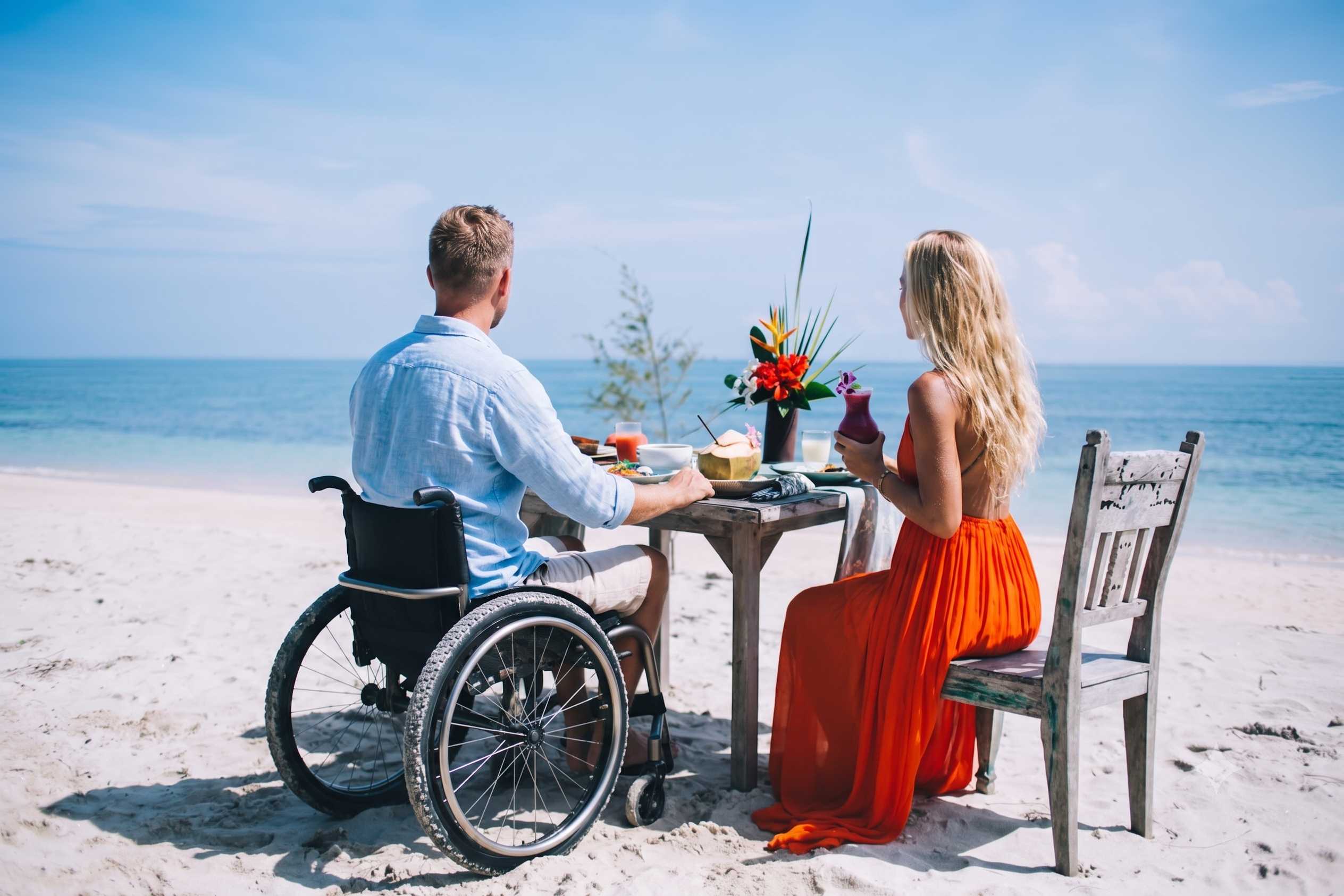
How Egypt Travel with Limited Mobility Becomes Truly Comfortable
Egypt travel with limited mobility can be beautiful, relaxed, and memorable — but usually exactly when the planning is honest, practical, and realistic. Not every excursion fits equally well, and that is completely okay. A good holiday does not mean ticking off as much as possible. What matters much more is finding the tours that feel truly comfortable and manageable.
Often, it is not the biggest or most famous excursions that work best, but the ones where pace, walking distances, breaks, and access are a better fit. A calmer boat trip, a private day tour, or a more simply planned excursion can often bring much more joy than an overfull day that is actually too tiring. That is exactly what often makes the biggest difference with Egypt travel with limited mobility.
The most important thing is to ask the right questions before booking and not rely only on pretty photos or general descriptions. How long is the transfer? Are there stairs? How much walking is involved? Are there seats and breaks? These details are not small extras. They are often exactly what makes a holiday day feel comfortable or unnecessarily difficult.
It is just as important to be honest with yourself. Not in a negative way, but simply so that the excursion actually feels good later. Some holidays become especially beautiful when planned a little more gently on purpose. Other highlights are manageable if done privately, more flexibly, or with more breaks. That is why Egypt travel with limited mobility is not about seeing less, but about choosing more wisely.
In the end, it can be said very simply:
A comfortable trip does not come from the idea that everything might be possible in theory, but from choosing tours that fit your body, your pace, and your holiday in practice.
And that is exactly when a trip to Egypt becomes not just a beautiful plan, but a holiday you can truly enjoy.