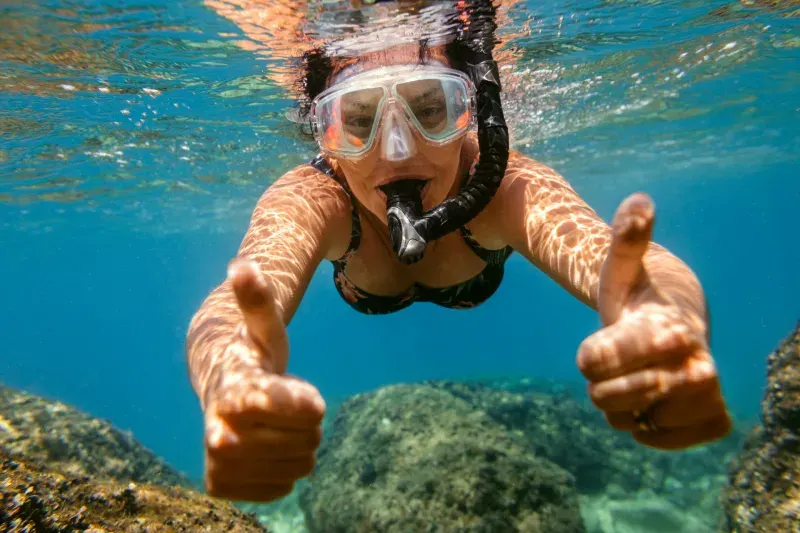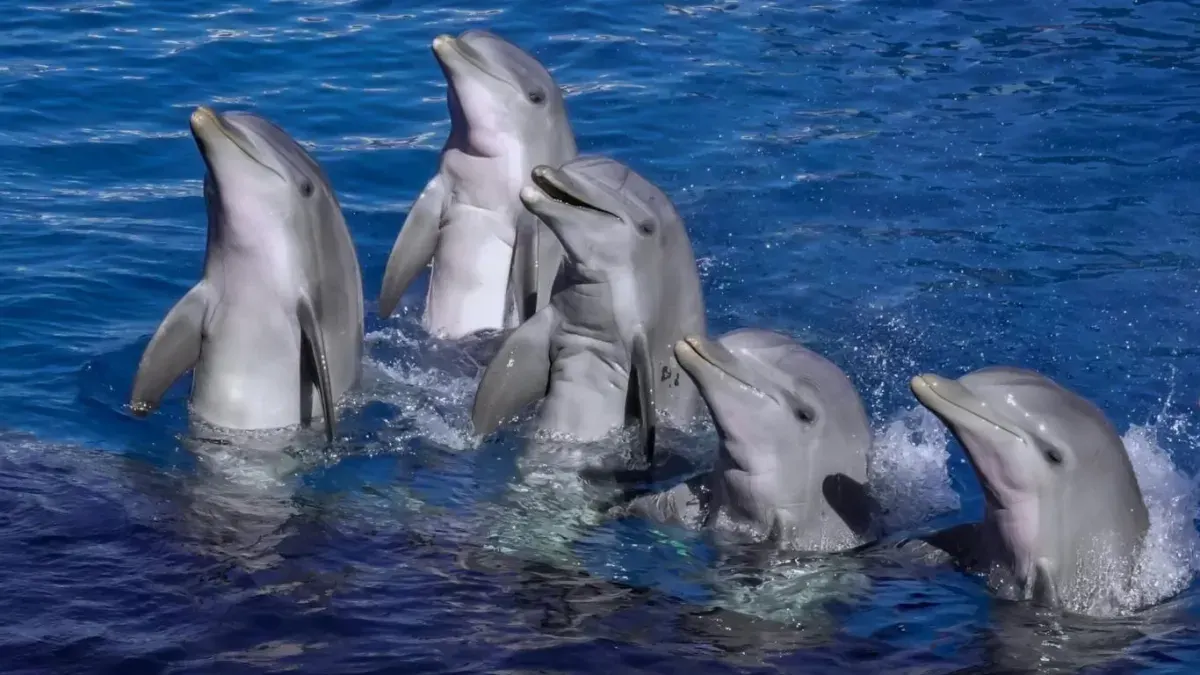
Let's get one thing out of the way first. Nobody has ever had a bad day because a dolphin turned up. Nobody. But plenty of people have had a very long, very sunburnt day because they booked a "guaranteed dolphin trip" that turned out to be five hours of staring at an empty horizon next to forty strangers and a speaker playing Europop.
Dolphin trips are among the most-searched excursions in Hurghada, and for good reason. They are also, if you pick the wrong one, among the most disappointing and, more importantly, among the most stressful for the animals. So this guide is the candid version: what a good dolphin trip looks like, what the dolphins actually get out of the deal (spoiler: nothing, so the trip needs to be gentle), which rules exist in the Red Sea, and what to ask any operator before you hand over your money.
First, the awkward truth about wild dolphins
The dolphins you can meet off Hurghada are wild. They do not work for fish, they do not hold a timetable, and they are not obliged to appear just because you have packed a new snorkel. Any operator who promises you a sighting with 100% certainty is either lying or doing something to the dolphins that you would not like if you saw it. Neither is a great start.
The species you are most likely to see on the coastal reefs off Hurghada are Indo-Pacific bottlenose dolphins. According to the International Whaling Commission's Whale-watching Handbook, they are regularly targeted at reefs such as Shaab Fanous, Shaab el Erg, Abu Nugar, Umm Gamar, Shadwan and the Gubal Islands, with trips running all year and peaking in summer (IWC Whale-watching Handbook, Egypt country profile). Spinner dolphins, the acrobatic ones that do the corkscrew leaps, rest in sheltered lagoons further south, most famously at Samadai Reef near Marsa Alam.
That last point matters, because Samadai is the most useful lesson the Red Sea has taught us about dolphin tourism.
What Samadai taught Egypt (and why it matters for your day out)
In 2003, an estimated 500 to 800 tourists a day were swimming with the dolphins at Samadai. The government suspended all visits that year and brought in a managed scheme in 2004, with zoning, time-area closures, permits, approach guidelines and a daily cap on visitor numbers. Since 2013, the Hurghada Environmental Protection and Conservation Association (HEPCA) has run the ticketing and enforcement (IWC Whale-watching Handbook, Samadai Reef case study).
Why does this matter? Because science backs the idea that dolphins need their rest. A 2018 study in Royal Society Open Science compared three Egyptian spinner dolphin resting sites. It found that boats and swimmers disrupted dolphin rest, especially around midday, and that the disturbance was strongest at the unregulated site. The protection measures at Samadai reduced it (Fumagalli et al., 2018, "Behavioural responses of spinner dolphins to human interactions", Royal Society Open Science 5(4), doi:10.1098/rsos.172044).
In plain English: spinner dolphins rest in the day and hunt at night, so a crowd of snorkellers kicking about at noon is the equivalent of someone hoovering outside your bedroom at 2 a.m. Well-run trips know this and behave accordingly. Badly run ones do not.
The rules around Hurghada (yes, there are rules)
Here is the bit most holiday brochures leave out. Around Hurghada, HEPCA developed a code of conduct for dolphin encounters which was later formalised into a decree enforced in the Red Sea Governorate. Breaking it can cost a fine of 10,000 Egyptian pounds. According to the IWC handbook, the main points are:
Boats: stay at least 30 metres from dolphins, travel no faster than 4 knots near them, put the engine in neutral if dolphins approach, and never herd, chase or split up a group.
Swimmers: wear fins, a mask, a snorkel and a life jacket; do not touch or feed the dolphins; no underwater scooters near them; and no rubbish in the water.
Read that list again, because it is also your checklist for judging an operator. If your skipper is roaring towards a pod at full speed while the guide shouts "jump in, jump in!", you are not on an ethical trip. You are on a trip that is about to get its captain fined, and you are about to be part of the problem.
Should you swim with dolphins at all?
This is where it gets interesting, and where we would rather give you the full picture than a sales pitch. Whale and Dolphin Conservation (WDC), one of the world's leading charities for these animals, discourages swimming with wild whales and dolphins. Its argument is that boats have to drop swimmers close to the animals, which can disrupt their routines and raise the risk of boat strikes, and that the disturbance is especially harmful for mothers with calves. WDC also points out that swimmers can end up in deep water with currents, and that the activity may not be covered by travel insurance (WDC, "Swimming with dolphins").
That is a fair and serious position, and it is worth taking on board. Our own take, as a private operator that cares about the reef we work on: the most responsible version of a dolphin day is a watching trip first. You go out, you look for the animals, you let them decide. If they are travelling, feeding or visibly relaxed and they swim close to the boat on their own terms, then and only then, a short, quiet entry into the water with a guide may be possible. If they are resting, moving away or have calves nearby, everyone stays on board and enjoys the view. No negotiation, no "just five more minutes".
If that sounds less thrilling than a guaranteed dolphin cuddle, good. The cuddle was never on offer. What you get instead is something rarer: a few minutes of wild animals behaving naturally, and the satisfaction of knowing you did not ruin their afternoon.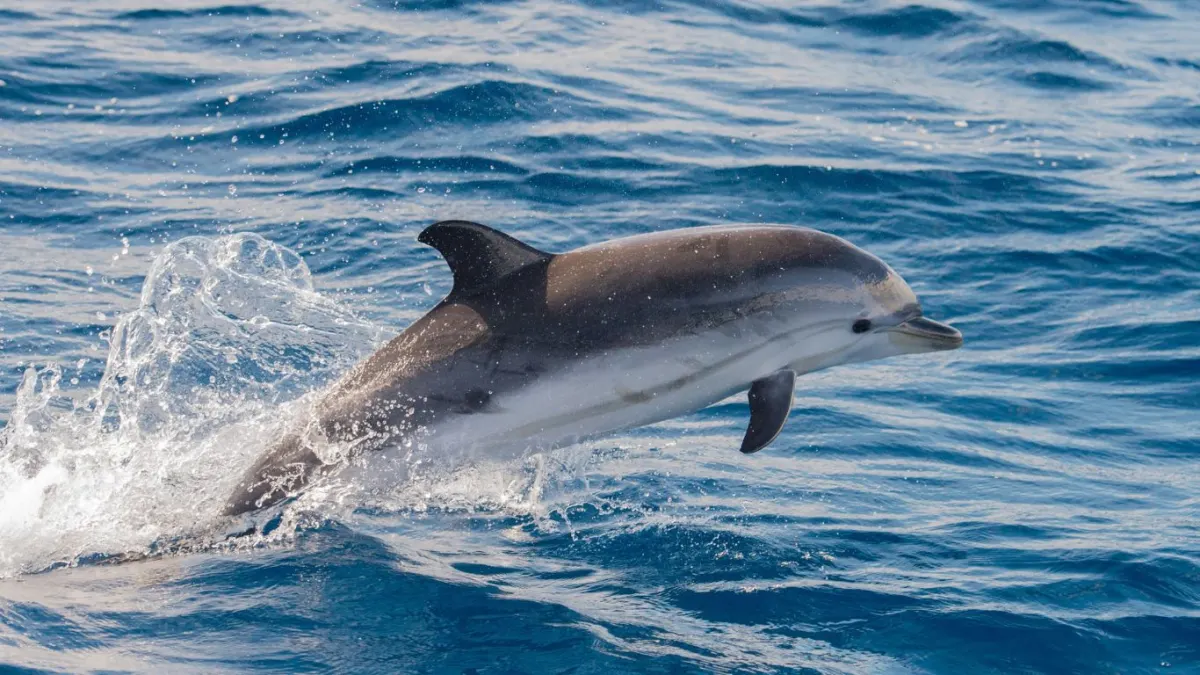
What a good dolphin trip from Hurghada actually looks like
Let's walk through a typical day on our private dolphin trip, so you know what "good" feels like.
Around 08:00: pickup. A driver collects you from your hotel in an air-conditioned vehicle. The exact time depends on your resort, and we confirm it with you beforehand, because standing in a lobby at 07:15 wondering whether your lift has forgotten you is nobody's idea of a holiday. We pick up from Hurghada, El Gouna, Sahl Hasheesh, Makadi Bay, Soma Bay and Safaga (Marsa Alam and El Quseir on request, so check availability and any surcharge first).
Morning: boarding and breakfast. You head to the yacht harbour, meet your crew and settle onto a boat that is yours alone. There is breakfast on board, which is important, because a hungry human is a grumpy human.
Late morning: the search. The boat heads out to the reefs where dolphins are known to pass, including the area locally called Dolphin House at Shaab El Erg. Your captain keeps to the speed and distance rules, your guide briefs you on how to behave, and everyone watches the water. This is also the part where children (and quite a few adults) discover that staring at the sea for twenty minutes is surprisingly absorbing.
Midday: dolphins, maybe. Sometimes the pod appears within minutes. Sometimes it takes a while. Sometimes it does not show at all. We will always be upfront about this, because wild animals cannot be guaranteed, and no honest operator can say otherwise. If the dolphins are there and relaxed, your guide decides whether an in-water moment is appropriate. If it is not, you stay on deck and enjoy it from there.
Afternoon: snorkelling and lunch. Two snorkelling stops on coral reefs are included, with the captain choosing the best sites for the day's conditions. Mask, snorkel, fins and life jacket are provided, no experience is needed, and you are free to stay on the boat if you prefer. There is a lunch buffet, fresh fruit, and unlimited water and soft drinks. Expect parrotfish, butterflyfish and emperor fish, and with a bit of luck a turtle or a ray, though as ever there are no guarantees.
Around 16:30: back at the hotel. Total time is roughly 8.5 to 9 hours. Bring a hat, take a deep breath and enjoy the comfortable ride back.
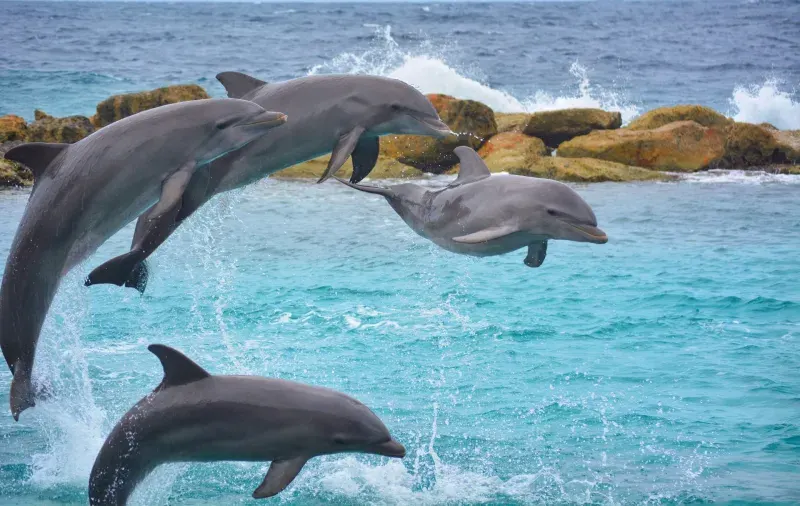
VIP Dolphin House tour from Hurghada: Watch free-ranging dolphins, snorkel vibrant coral reefs & enjoy a relaxing day on the Red Sea.
From
How much does it cost, and what is included?
Our private dolphin trip is priced per adult according to group size: €135 for 1 to 2 people, €100 for 3 to 5 and €80 for 6 to 8. Children aged 6 to 11 pay half the adult price, children aged 0 to 5 go free, and adults are counted from 12. Hotel transfer, the private boat, crew, a qualified snorkel guide, equipment, breakfast, lunch, fruit and unlimited water and soft drinks are all included. Tips, personal expenses, souvenirs and any professional photos are not. You can cancel for free up to 24 hours before.
That is the whole price. No surprise "marine park fee" appearing at the pier, no mandatory photo package, no stop at a papyrus shop on the way back. Orient Discovery has no scheduled shopping stops on any trip, and this one is no exception, and if you want to see how traps like that work elsewhere, our guide to tourist traps in Hurghada and how to avoid them is worth a read before you book anything.
Ten questions to ask before you book any dolphin trip
Whoever you book with, these questions separate the careful operators from the cowboys. A good company answers them instantly. A bad one changes the subject.
Do you guarantee dolphins? The only right answer is no.
How many guests are on the boat? A private boat or small group means less noise, less pressure and a better experience. A 60-person party boat is a different animal entirely.
Do you follow the HEPCA distance and speed rules? Thirty metres and four knots is the benchmark.
Will you ever chase or surround the dolphins? Never, full stop.
Who decides whether we get in the water? It should be an experienced guide, and the answer should depend on what the dolphins are doing, not on whether the group is getting restless.
Do you limit the time in the water? Short and quiet beats long and splashy.
Is feeding or touching allowed? It is not, and it is also against the code.
What is the fallback if there are no dolphins or the weather turns? Reef snorkelling and a relaxed boat day is the ideal answer.
What exactly is included? Meals, drinks, equipment, transfers and fees should all be listed, with no extras sprung on you later.
What is the cancellation policy? Free cancellation up to 24 hours before is a good sign, because it means the company is confident in what it sells.
When to go, and what to bring
Dolphin trips run all year in Hurghada, with a peak in summer, according to the IWC handbook. Early starts are good news for you too, as the sea is calmer and the light is lovely before the midday heat sets in. If you are planning your holiday around the weather, our guide to the best time to visit Hurghada breaks it down month by month.
Pack reef-safe sun cream, a rash vest or a T-shirt for the snorkelling stops, a hat, sunglasses, a towel, a light layer for the boat ride back and a camera on a wrist strap (dolphins are no fans of dropped phones, and neither is your holiday budget). A quick word on sun cream: some ingredients harm corals, and the US National Oceanic and Atmospheric Administration has a good explainer if you want the detail (NOAA, "Skincare chemicals and coral reefs").
Weather decides the final route. Rough seas can change the reef, the swimming plan or the date entirely, and a good operator will tell you that in advance rather than send you out in a swell that turns the whole boat green.
Travelling with kids? Read this part
Dolphin day is a lovely family outing, and the half-price rate for children aged 6 to 11 and free travel for under-sixes help. A private boat also means you set the pace: nap breaks, snack breaks and "I need the loo again" breaks are all absolutely fine. Give exact ages when booking so the crew can sort the right life jackets, and keep younger children on deck during any in-water moment. Our guide to boat trips in Hurghada with children has more detail on what suits which age.
Not sure dolphins are the right call? Alternatives that work
If you read all this and think "I would rather skip the wildlife lottery", you have plenty of excellent options. A private speedboat day lets you design your own route around the Giftun Islands, with snorkelling at whichever reef you like. If you want a postcard beach with turquoise water, Orange Bay, Eden Island and Nemo Island are compared head to head in another guide.
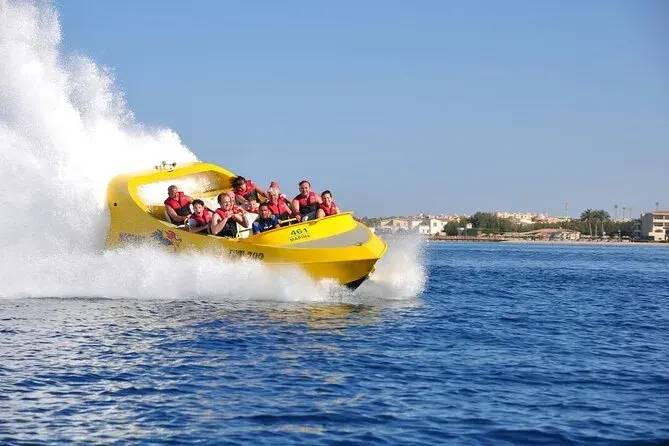
Private speedboat tour from Hurghada with snorkeling, an island visit & hotel transfers. Personalized, flexible & free consultation included.
From
And if you want to go deeper into the underwater world, our beginners' guide to scuba diving in Hurghada explains how your first dive works. The reef fish do not mind being watched, and they do not need a 30-metre exclusion zone either.
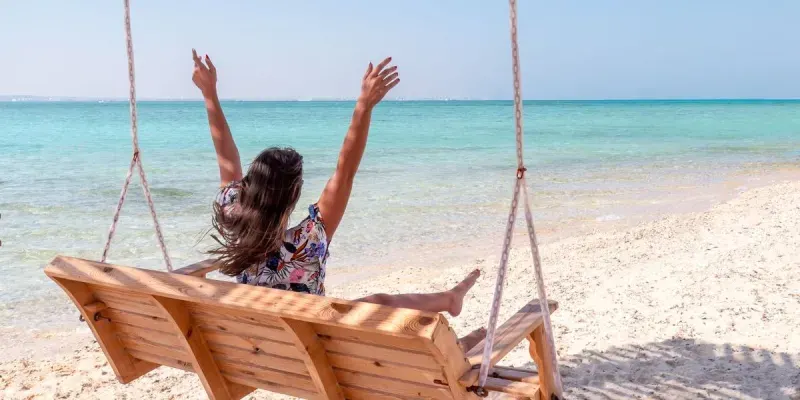
Orange Bay tour from Hurghada with snorkeling, a pristine beach & a boat cruise. Experience the Caribbean of Egypt with free consultation.
From
Dolphins on their terms
Go for a private or small boat. Expect to watch dolphins rather than ride them. Treat any in-water moment as a gift from the dolphins, not a right you have paid for. Ask the ten questions. Say no to anyone who guarantees a sighting. And if the dolphins do show up, keep your voice down, let them set the terms and put the camera away for a minute. You will remember it better.
If you would like us to plan the day around your hotel, your group and your pace, send us a message with your dates and we will come back with exact pickup times and a fixed price. No scheduled shopping stops, no hidden fees, and no Europop.