Luxor Day Trip from Hurghada: The Ultimate Cultural Tour Guide 2027
A Luxor day trip from Hurghada is realistic in one day. Expect a long day of around 14 hours, with roughly 3.5 hours of driving each way from Hurghada. In return, you can see Karnak Temple, the Valley of the Kings, Hatshepsut Temple and the Colossi of Memnon, cross the Nile by motorboat and return to your Red Sea hotel the same evening.
For many visitors, this is the simplest way to add Ancient Egypt to a beach holiday without changing hotels. The trade-off is time: Luxor is not close to Hurghada, and one day means an early start, several major sites and a long drive home.
Is a Luxor Day Trip from Hurghada Really Possible in One Day?
Yes, provided you are comfortable with a full sightseeing day.
The current private Orient Discovery tour is listed at around 14 hours. Hurghada is about 291 km from Luxor, and the drive normally takes around 3.5 hours each way. Pick-up is early in the morning, with the exact time depending on your hotel and resort. The day combines the East Bank and West Bank before the return drive to the Red Sea.
Roughly seven hours can therefore be spent on the road in total.
That is a significant amount of driving. The real decision is whether the time in Luxor is worth it for you.
For a first visit, one day works well when your priorities are the main archaeological sites rather than every temple and museum in the city. You can understand the basic geography of ancient Thebes, enter royal tombs on the West Bank and stand among the columns of Karnak on the East Bank.
One day works less well if you dislike early starts, want long museum visits, hope to see Luxor Temple after dark or want to study several special tombs without watching the clock.
In those cases, staying overnight can be a better use of your holiday time.
Luxor Day Trip from Hurghada Itinerary: What the Day Actually Looks Like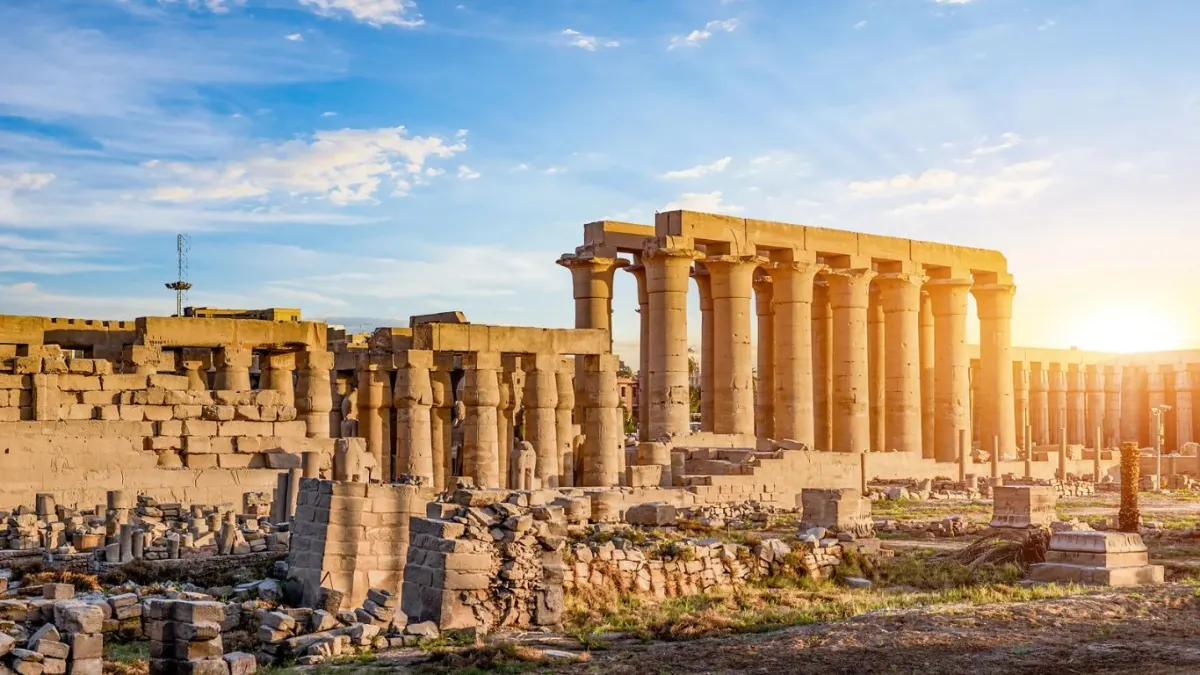
The order can change for operational reasons, so it is better to think in stages rather than fixed minute-by-minute promises.
Part of the day | What normally happens |
|---|---|
Early morning | Direct hotel pick-up and private drive from Hurghada towards Luxor |
Morning | Karnak Temple with your Egyptologist |
Around midday | Lunch in Luxor |
After lunch | Short motorboat crossing of the Nile |
Afternoon | Valley of the Kings with three regularly open tombs |
Afternoon | Mortuary Temple of Queen Hatshepsut |
Later afternoon | Short stop at the Colossi of Memnon |
After sightseeing | Private return transfer to Hurghada |
Luxor is divided by the Nile, so this structure makes practical sense.
Karnak stands on the East Bank. The Valley of the Kings, Hatshepsut Temple and the Colossi of Memnon are on the West Bank. A short Nile crossing breaks up the day and makes the geography of the city much easier to understand.
The current private programme includes the motorboat crossing rather than selling it as a separate optional cruise.
It is a short transfer across the Nile, not a full sightseeing cruise.
What You See on a Luxor Day Trip from Hurghada
Karnak Temple
Karnak is where the scale of ancient Thebes becomes obvious.
The complex grew over many centuries as different rulers added gateways, courts, obelisks, chapels and other structures. The Great Hypostyle Hall is one of its best-known areas, with 134 columns.
A guide matters here since the site is too large to understand simply by walking from one impressive structure to the next.
The useful questions are not only:
“How old is this?”
They are:
“Who added it?”
“What was this space used for?”
“Why did later rulers build around earlier work?”
For a one-day visitor, the aim is not to inspect every corner of Karnak. It is to leave with a clear idea of what the complex was and why it mattered.
Valley of the Kings
The Valley of the Kings is not one tomb.
It is a royal burial area containing tombs from Egypt’s New Kingdom, with different plans, decorations and states of preservation.
The current standard private tour includes entry to three regularly open royal tombs. Which three you visit can change as tombs may rotate or close.
Special tombs such as Tutankhamun and Seti I require separate official tickets and are not part of the standard tour price.
This is why it is unwise to build your whole day around one specific standard tomb months before travelling.
If there is a special tomb you strongly want to see, mention it before booking. You can then check current access and decide whether the extra ticket is worth adding.
Temple of Hatshepsut
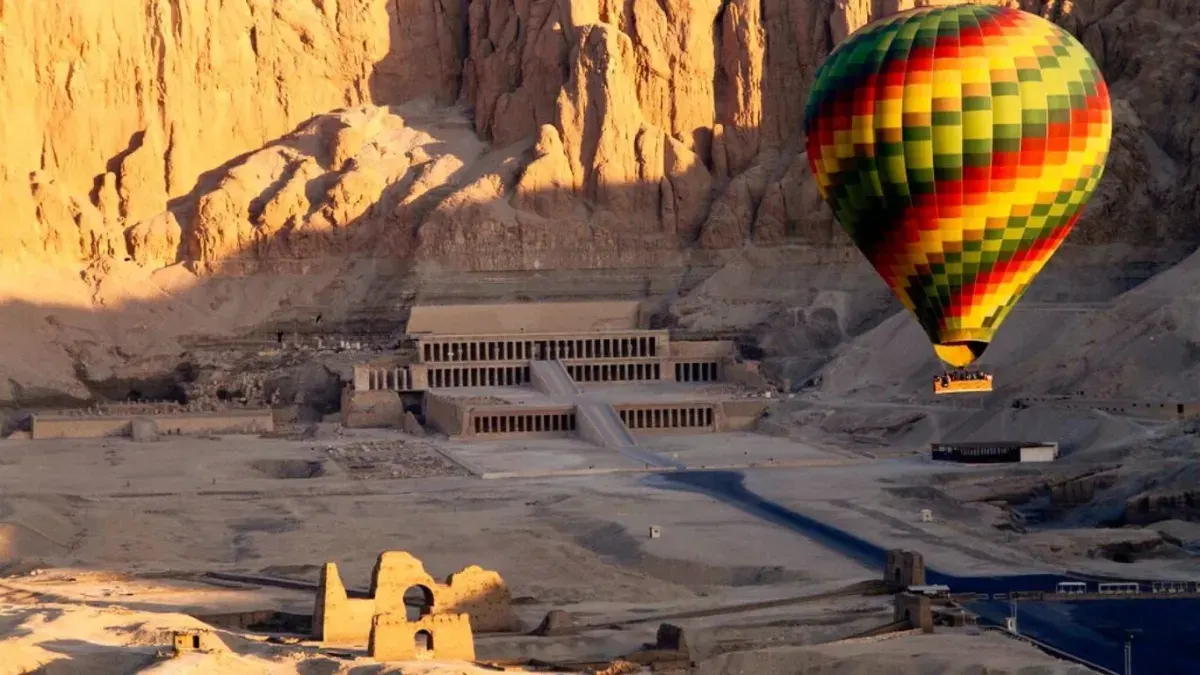
Hatshepsut’s mortuary temple at Deir el-Bahari is easy to recognise because of its broad terraces set against the limestone cliffs.
Hatshepsut ruled as pharaoh during Egypt’s 18th Dynasty. Her temple gives an Egyptologist a useful setting for explaining royal image-making, religion and the way later political changes affected her monuments.
The site involves open walking with limited shade in places, so sun protection matters, especially during warmer months.
Colossi of Memnon
The Colossi of Memnon are two monumental seated statues of Amenhotep III.
Today they stand in an open area and can look like isolated monuments. They originally belonged to the pharaoh’s much larger mortuary temple.
This is normally a shorter stop than Karnak or the Valley of the Kings.
It works best as historical context rather than as a long visit.
Crossing the Nile
The Nile crossing is simple but useful.
After hours of driving and walking, a short motorboat ride changes the pace and connects the two sides of Luxor in a way that makes the city easier to understand.
Do not book the day expecting a long sightseeing cruise.
Think of it as an included river crossing with a view.
Valley of the Kings: Which Tombs Are Included?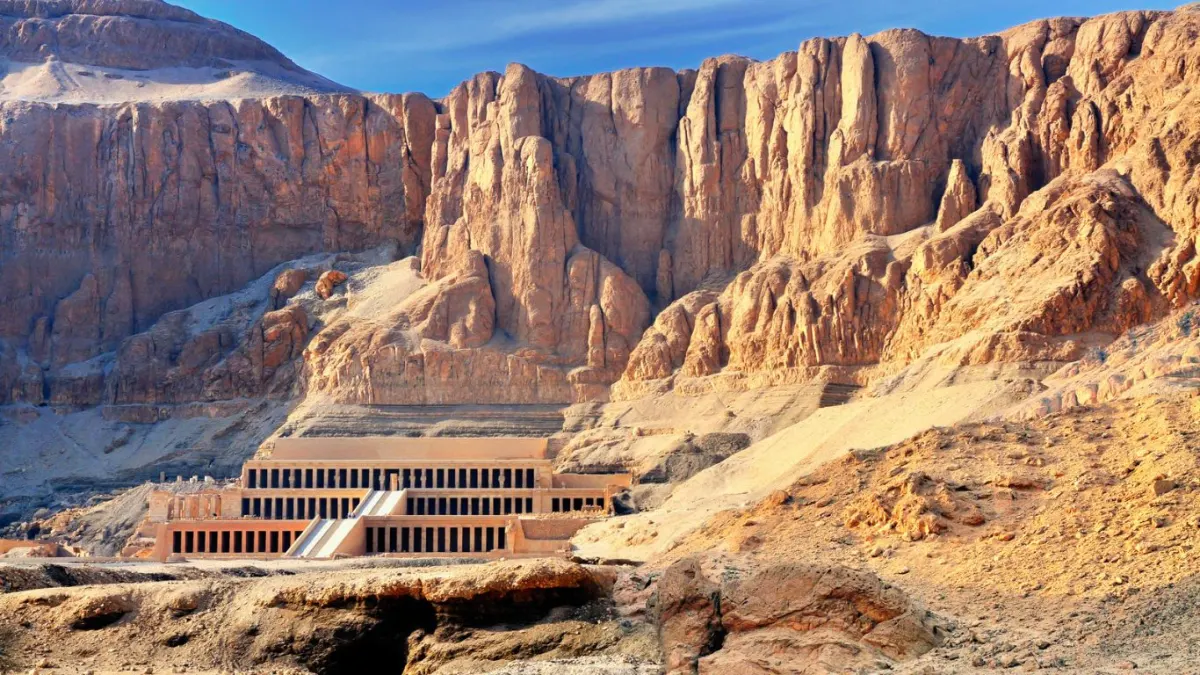
This is one of the details that often causes confusion.
The standard Valley of the Kings entry used on the current private tour covers three regularly open tombs. The available selection can change.
Some well-known tombs have separate tickets.
The current official ticket system lists extra admission for tombs such as Tutankhamun, Seti I and Ramesses V & VI. Prices and access can change, so for a 2027 visit you should check the official ticket platform close to your travel date rather than relying on an old screenshot or social-media post. Official Valley of the Kings ticket information
Should you pay for an extra tomb?
That depends on your interests.
Tutankhamun’s tomb is famous mainly because of the discovery and the young king connected with it, not because it is the largest or most richly decorated tomb in the valley.
Seti I is very different in scale and normally carries a much higher extra-ticket cost.
For a first visit, three standard tombs already give you a strong introduction.
If you have read about a particular pharaoh or tomb before travelling, an extra ticket may have more value.
How Much Does a Luxor Day Trip from Hurghada Cost in 2027?
The figures below are the latest published prices available in 2026.
They are not a promise that the same prices will remain unchanged throughout 2027.
Group size | Vehicle | Latest published price per person |
|---|---|---|
2 guests | Private sedan | €150 |
3–5 guests | Private minibus | €145 |
6–8 guests | Private minibus | €90 |
The price becomes lower per person as the group grows: vehicle and guide costs are shared across more guests.
Before paying for a 2027 date, ask for the current confirmed price.
Do not treat an old article, screenshot or search result as a fixed future tariff.
The live tour currently includes private transport, a German- or English-speaking Egyptologist, the stated standard entrance tickets, lunch and the Nile motorboat crossing.
What Is Included, and What Costs Extra?
Item | Current private tour |
|---|---|
Private return transport from Hurghada | Included |
German- or English-speaking Egyptologist | Included |
Karnak Temple standard entrance | Included |
Valley of the Kings standard entrance | Included |
Three regularly open royal tombs | Included |
Hatshepsut Temple entrance | Included |
Colossi of Memnon stop | Included |
Lunch | Included |
Motorboat crossing of the Nile | Included |
Drinks with lunch | Extra |
Tutankhamun tomb | Extra |
Seti I and other special tomb tickets | Extra |
Personal spending | Extra |
Tips | Voluntary |
Transfer from Marsa Alam or El Quseir | Supplement may apply |
The most useful booking habit is simple: compare what is included rather than comparing only the headline price.
A low-cost group tour can offer good value.
A higher-priced private tour can offer good value too.
They may simply be selling a different use of your time.
Private Luxor Day Trip from Hurghada
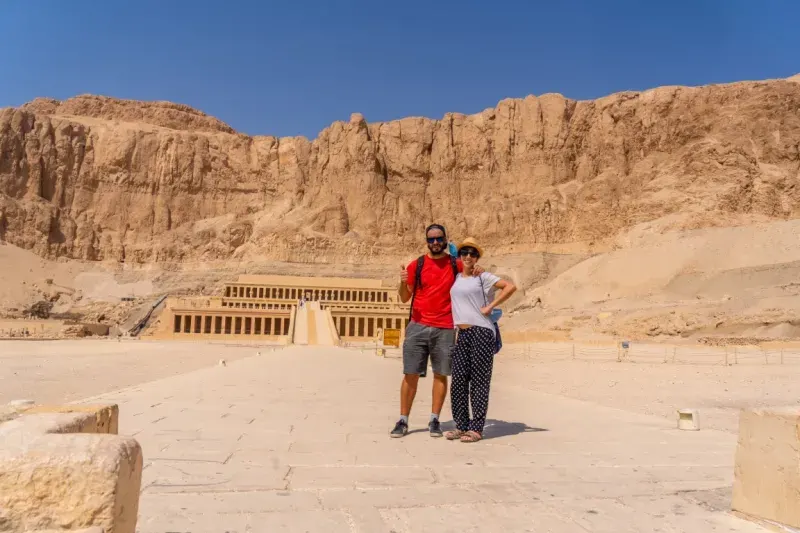
Luxor day tour featuring the Valley of the Kings, Karnak Temple, and the Temple of Hatshepsut. Private small group, German-speaking Egyptologist, no shopping stops, and 24/7 support.
From
Private Tour or Coach Tour?
A coach tour has one obvious advantage: it is usually cheaper.
If your main goal is to see Luxor at the lowest possible price and you are comfortable with fixed schedules, shared guiding and a larger group, that can be a sensible choice.
Private travel changes the practical side of the day.
Your group is collected directly rather than being part of a long multi-hotel pick-up route.
You have your own guide.
You can ask questions without waiting for a large group to regroup at every stop.
Breaks are easier to discuss.
That does not make the road shorter.
It does not make summer cooler.
It does not mean archaeological sites stay open for you personally.
Private travel mainly gives you more control over the hours that can be controlled.
For couples, families, friends and repeat visitors, that can matter on a day that uses most of your waking hours.
Shopping Stops: What Should You Ask Before Booking?
Shopping is not the problem.
Unwanted shopping is.
Some travellers enjoy alabaster workshops, papyrus shops or perfume stores.
Others have one day in Luxor and would rather spend their available time on history.
Ask the operator one direct question before booking:
“Are any shop, workshop, factory or sales visits built into the programme?”
The current private Orient Discovery Luxor product states that there are no scheduled shopping stops.
That does not stop you buying something if you genuinely want to.
It means a shop visit is not inserted into the cultural programme as a required stop.
This is useful when comparing operators. A low price and a higher price may reflect different group sizes, transport, guiding and use of time.
Is the Luxor Day Trip Too Tiring?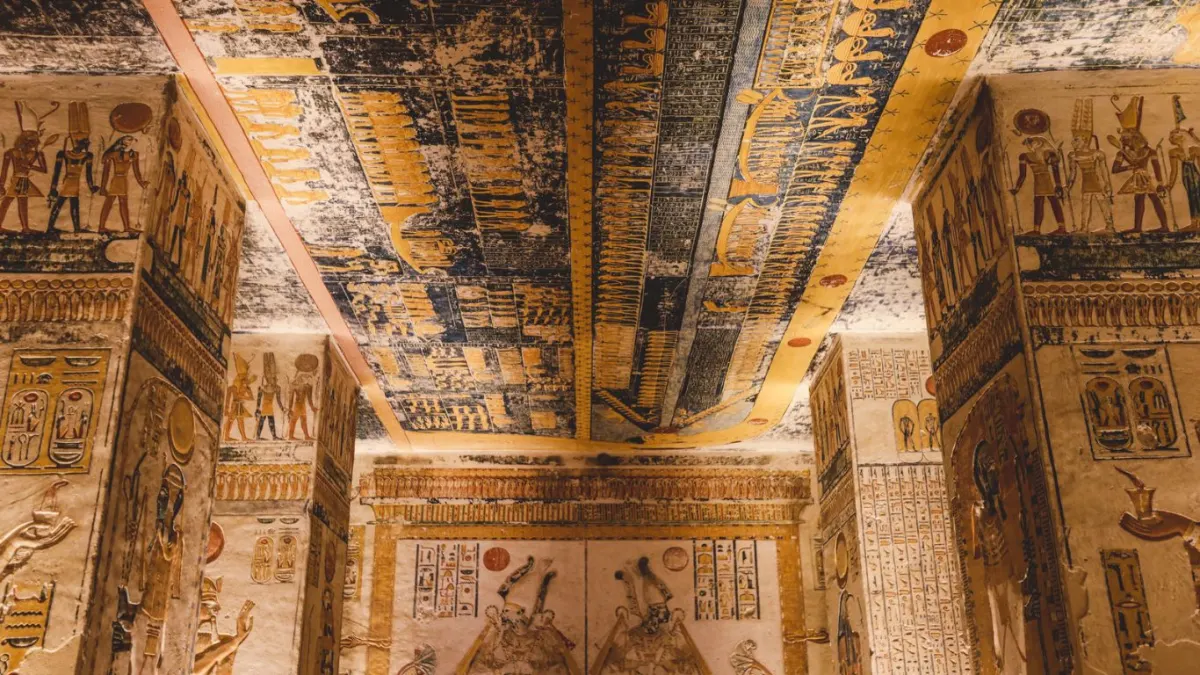
For some travellers, yes.
It is a long day with an early start, around seven hours of total road travel from Hurghada and several archaeological sites.
For other travellers, the same day feels busy but manageable since much of the driving is spent sitting in an air-conditioned vehicle.
Think about your own group rather than asking whether the tour is “easy” in general.
For families, children who enjoy history and cope well with long car rides may have a very good day. Younger children can find the early start, heat and long return drive harder. A private format makes breaks easier to discuss, but it does not remove the distance.
For older travellers, age alone is not the deciding factor. Walking ability, balance, heat tolerance and comfort on steps matter more. The Valley of the Kings involves slopes and tomb entrances. Hatshepsut Temple has broad ramps and open walking. Karnak covers a large area.
For travellers with limited mobility, discuss your exact needs before booking. A vehicle solves the long-distance transport problem, but archaeological sites were not built as modern accessible attractions. Uneven surfaces, ramps, heat and tomb entrances can still create limits.
A better question than “Can I bring a wheelchair?” is:
“Which parts of this exact itinerary will be practical for me?”
Best Time of Year for a Luxor Day Trip
Luxor can be visited year-round, but the day feels very different by season.
From late autumn through early spring, walking around open archaeological sites is usually easier than during the hottest part of the year.
Summer is possible, but heat becomes a bigger part of the planning.
You need water, a hat, sun cream, light clothing and realistic expectations about how much time you want to spend standing in open areas.
The early departure from Hurghada helps, as part of the drive takes place before the hottest hours.
In cooler months, a light layer can be useful for the early drive, though Luxor may become warm later in the day.
No article can promise the weather for your date.
Check the forecast shortly before travelling and pack for the actual conditions.
What to Bring for a Full Day in Luxor
Keep your bag small and practical. Comfortable walking shoes, a sun hat, sunglasses, sun cream, water for the drive, personal medication, some cash for drinks or optional tomb tickets, a portable charger and a light layer during cooler months cover most practical needs.
You do not need to dress as if you are crossing the desert on foot.
You do need clothing that works for heat, walking and a long day away from the hotel.
For tombs and temples, comfortable shoes matter more than stylish ones.
One Day or Two Days in Luxor?
A one-day trip answers a practical question:
Can I see the main ancient sites of Luxor and keep my hotel in Hurghada?
Yes.
You can see Karnak, three standard tombs in the Valley of the Kings, Hatshepsut Temple and the Colossi of Memnon, with lunch and a short Nile crossing.
A two-day visit answers a different question:
Do I want more time in Luxor itself?
An overnight stay can make room for experiences that do not fit naturally into a standard day trip, such as Luxor Temple after dark.
Some two-day programmes may include a sunrise balloon flight, depending on the booked itinerary and operating conditions.
Two days do not remove the drive between Hurghada and Luxor.
They spread the sightseeing across a longer stay and remove the need to finish every Luxor visit before the same evening’s drive home.
Choose one day if your holiday time is limited and the main ancient sites are your priority.
Choose two if pace, evening time in Luxor and a wider cultural programme matter more than saving a hotel night.
Is a Luxor Day Trip from Hurghada Worth It?
For a first-time visitor staying in Hurghada who wants to see the core sites of ancient Thebes, yes.
The day gives you two very different sides of Luxor.
Karnak introduces temples, priests and royal building projects.
The West Bank takes you into royal burial traditions, mortuary temples and New Kingdom tomb decoration.
The weakness is obvious:
the drive is long.
If seven hours of road travel for one day of archaeology sounds miserable to you, pay attention to that reaction.
Stay overnight or save Luxor for a longer Egypt trip.
If you are happy to trade one long day for the chance to stand inside Karnak and enter royal tombs without changing hotels, the trip makes sense.
The best version is not the one with the longest list of stops.
It is the one where you understand what is included, how much road time is involved and what pace suits you.
FAQ
How long is a Luxor day trip from Hurghada?
The current private programme is listed at around 14 hours. Actual timing depends on hotel location, traffic, road conditions and the pace of the day.
How far is Luxor from Hurghada?
The current tour information gives the distance at about 291 km from Hurghada, with roughly 3.5 hours of driving each way.
What time does the Luxor tour start?
Pick-up is early in the morning. The exact time depends on your hotel and resort and is confirmed for the booking.
Which sights are included on a Luxor day trip from Hurghada?
The current private itinerary includes Karnak Temple, the Valley of the Kings, Hatshepsut Temple, the Colossi of Memnon, lunch and a motorboat crossing of the Nile.
Which tombs can I visit in the Valley of the Kings?
The standard tour includes three regularly open tombs. The exact selection can change. Special tombs such as Tutankhamun and Seti I require separate tickets.
Is lunch included?
Yes. Lunch is included in the current private tour. Drinks at the restaurant are extra.
Is the Nile boat trip included?
Yes. The current private programme includes a short motorboat crossing of the Nile. It is not a full sightseeing cruise.
Are there shopping stops?
The current private Orient Discovery programme states that it has no scheduled shopping stops. When comparing other tours, ask the operator directly what commercial stops are built into the day.
Is a Luxor day trip suitable for children?
It can be, especially for children who enjoy history and cope well with long drives. The early start, heat and overall length of the day are the main points for parents to weigh.
Is one day enough for Luxor?
One day is enough for the main sites included in a standard Hurghada day trip. If you want Luxor Temple after dark, more time at the monuments or a slower pace, an overnight stay is a better fit.
A Luxor day trip from Hurghada is a big day, not a quick excursion.
Go into it knowing the travel time, included sites and extra tomb-ticket rules, and the booking decision becomes much easier.
Request free personal advice: discuss your hotel location, group size, guide language, optional tombs and preferred pace before booking your 2027 Luxor date