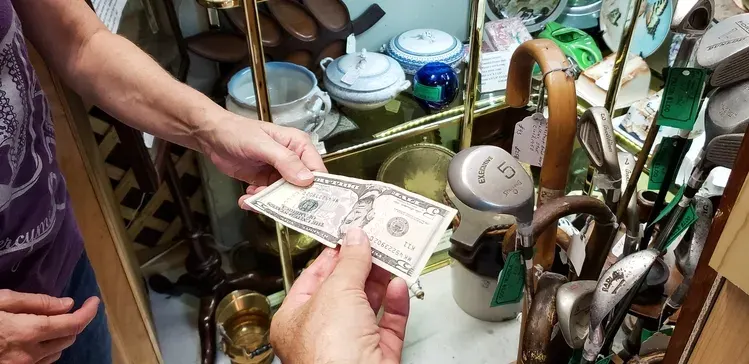
Tipping in Egypt is one of those subjects that can leave first-time visitors unsure before they even arrive.
How much should you give a driver?
Does the porter expect something?
What about your tour guide?
Do you need to tip every day on a Nile cruise?
And what should you do if someone looks at the tip you have just given and makes it obvious that they expected more?
Then there is another situation many Egypt visitors recognise.
You are walking near an archaeological site or through a market.
A seller shows you a bracelet.
“Very good price.”
You smile and say no.
He keeps walking beside you.
The price drops.
Suddenly, you are his best friend.
Then he holds out the bracelet.
“Gift!”
You do not actually want a gift, but you take it for a moment because you do not want to seem rude.
Two minutes later, the gift has somehow developed a price.
Situations like these can be funny when you know how to deal with them.
When you are completely unprepared, they can become tiring.
This guide is not about pretending every part of travelling in Egypt is perfect. It is also not about judging an entire country based on a few uncomfortable encounters.
Tipping is common in many parts of Egypt’s tourism industry. At the same time, you do not need to hand out money after every short interaction.
Persistent selling can also happen around busy tourist attractions.
That does not mean it will happen everywhere.
It simply means that a little preparation can make your trip much easier.
This guide will show you:
what baksheesh means,
when tipping in Egypt is normal,
how much you can roughly plan for,
when you do not need to tip,
what to do when somebody pushes for more,
why small banknotes are useful,
what “tips included” may actually mean,
how to deal with persistent sellers,
when selling becomes harassment,
and what to check before booking your trip.
The aim is not to make you suspicious of everyone you meet.
Quite the opposite.
Once you understand the usual situations, you do not need to spend your holiday constantly wondering what people expect from you.
You can be friendly.
You can tip when you value good service.
You can buy something when you genuinely want it.
And you can also say:
No, thank you.
Without feeling guilty.
What Does Baksheesh Mean in Egypt?
Sooner or later, you will probably hear the word baksheesh during a trip to Egypt.
In everyday tourism, it is usually used to mean a small tip or financial thank-you.
You may give baksheesh when:
somebody carries your luggage,
a driver gets you somewhere safely and reliably,
a hotel employee gives you extra help,
a guide spends a full day with you,
or somebody provides a small service.
This is where the first misunderstanding often begins.
Baksheesh does not mean that every outstretched hand automatically needs to be paid.
A voluntary tip is different from:
an entrance fee,
an agreed service price,
an official supplement,
a purchase price,
or a required charge.
Keep those differences in mind.
For first-time visitors, the number of small service situations can quickly create the feeling that money is expected everywhere.
A porter carries your bag.
A toilet attendant hands you paper.
A driver takes you to the hotel.
A guide spends a whole day with you.
Someone at an archaeological site points out a photo angle.
These are very different services.
They should not all be treated in exactly the same way.
Do I Have to Tip Constantly in Egypt?
No.
That is probably the most useful answer to remember.
Tipping is common.
That does not mean:
“You must give everyone money.”
A better question is:
Was there a real service that you want to recognise?
If yes, a tip may be appropriate.
Did somebody offer “help” you never asked for?
That does not automatically create a payment obligation.
Did somebody already receive the agreed price for a service?
You can still tip if you were happy.
You do not need to tip because you are worried about an unhappy reaction.
And if you have already given something, you do not need to reach back into your wallet because the response was less enthusiastic than expected.
Many travellers become unnecessarily anxious here.
They want to be polite.
They want to respect local habits.
They also do not want to feel as though every interaction ends with opening a wallet.
Those two things can coexist.
You can handle tipping in Egypt respectfully without turning it into a payment after every conversation.
How Much Should You Tip in Egypt in 2026?
Now we reach the question most travellers really want answered:
How much should you tip in Egypt?
The slightly annoying but accurate answer is:
It depends on the situation.
There is no official Egyptian tipping chart covering every porter, driver, restaurant and guide.
A ten-minute service is not the same as a private guide looking after you for eight hours.
A porter carrying one suitcase should not automatically be treated the same way as a driver accompanying you for several days.
So treat the figures below as practical guidance for 2026, not fixed rules.
Tipping in Restaurants
Start with one simple step:
Check the bill.
Has a service charge already been added?
If it has, you do not automatically need to add the same percentage again.
When there is no service charge, around 10% is a useful starting point for normal restaurant service.
If the service was particularly good, you can give more.
In small cafés or simple local restaurants, rounding up or leaving a smaller amount may be enough.
Example
Your bill is 900 EGP and there is no service charge.
Around 90 EGP would be an easy 10% reference point.
Was the service excellent?
You can give more if you want.
Was it poor?
You are not required to reward poor service generously.
Hotel Tipping: Porters and Housekeeping
Baksheesh comes up more often in hotels.
Somebody carries your suitcase.
Another employee brings something to your room.
Housekeeping cleans your room every day.
For porters, a small amount per bag is common.
For housekeeping, many travellers prefer leaving a modest amount each day rather than waiting until the end of the stay.
Why?
Because the person cleaning your room on Monday may not be the same person working on Thursday.
You do not need to turn this into daily maths.
The point is simply to keep the amount proportionate to the service.
Toilets: Small Notes Are Very Useful
At public toilets and toilets around tourist attractions, you may find attendants who:
clean the area,
provide toilet paper,
or look after the facilities.
This is a classic situation for a very small tip.
Keep small Egyptian-pound notes ready.
That prevents a 20 EGP toilet tip from becoming a full discussion because your wallet only contains much larger notes.
Taxi, Uber and Careem
With Uber or Careem, you can round up the fare or add a small amount when you were happy with the ride.
With a normal taxi, the more important issue is agreeing on or understanding the fare first.
A tip should not be used to fix an unclear price.
First comes the agreed fare.
Then you decide whether you want to add something for good service.
Small Help at an Archaeological Site
This can be less clear.
An employee may point out a detail in a tomb.
Someone may help you take a photo.
Another person may offer help you never asked for.
If you knowingly accepted a small service, a small tip can make sense.
The key word is:
accepted.
If you did not want the help, you do not owe money simply because the other person acted before you could say no.
This matters when somebody:
takes your phone and starts taking photos without being asked,
begins giving an explanation you did not request,
points something out after you already declined,
or provides a small service mainly to ask for money afterwards.
A voluntary tip should follow a service you voluntarily accepted.

How Much Should You Tip a Private Driver?
This is where rigid tipping charts become much less useful.
A driver taking you ten minutes from a hotel to a restaurant is not the same as a driver taking you from Hurghada to Luxor, waiting all day, moving between several sights and driving you back that evening.
For longer private tours, I would not use one fixed number as a rule for all of Egypt.
Think about:
the length of the day,
distance travelled,
reliability,
helpfulness,
group size,
and the quality of the service.
The easiest solution is to ask your tour operator before the trip:
“What tip is normally recommended for our driver on this tour?”
A recommendation for your exact trip is much more useful than a random figure from an old travel blog.
How Much Should You Tip a Guide or Egyptologist?
The same applies here.
A guide taking a group around a museum for two hours is different from a private Egyptologist who:
meets you in the morning,
spends the whole day with you,
organises the sightseeing flow,
explains history,
answers questions,
helps with local situations,
and perhaps travels with you for several days.
A useful rule is:
The longer and more personal the service, the larger the voluntary thank-you may be.
For multi-day trips, ask the operator before travelling what guests normally plan for.
Then you can include it in your budget rather than guessing at the end.
Should the Driver and Guide Receive the Same Amount?
Not necessarily.
They do different jobs.
The driver is responsible for safe and reliable transport.
The guide or Egyptologist handles guiding, explanations and often much of the organisation on site.
If you want to tip both, giving it directly to each person is the clearest approach.
Do not assume that money handed to one person will automatically be shared with everybody unless the operator has told you that is how their system works.
How Does Tipping Work on a Nile Cruise?
A Nile cruise is another situation entirely.
Many people work behind the scenes:
reception staff,
restaurant teams,
housekeeping,
kitchen staff,
technical crew,
and other employees.
Some ships or tour operators therefore use a shared crew tipping system.
That can be much easier than trying to tip different crew members all day.
Before travelling, ask:
“Are crew tips included in the cruise price?”
If not:
“What total amount do you recommend per person for the whole cruise?”
That lets you deal with the matter once instead of wondering about baksheesh at every meal.
Should You Tip in Egyptian Pounds or Euros?
For small everyday tips, Egyptian pounds are usually the easiest option.
They allow you to give modest amounts without relying on large euro or dollar notes.
A driver or guide after a full-day trip may also accept foreign currency.
For small services, local currency is generally simpler.
Coins in foreign currencies are also less useful than banknotes because they can be harder for the recipient to exchange.
The Simple Tipping Rule for Egypt
If all these different situations are already becoming too much, remember four things:
Small service = small tip.
Long personal service = larger recognition.
Excellent service = voluntarily more.
Pressure or disappointment = not a reason to increase your tip.
That final point matters.
Because one of the most uncomfortable situations is when you have already tipped and somebody still asks for more.
“But I Already Tipped” – When Someone Wants More
One of the most awkward situations around tipping in Egypt can happen when you have already given something.
A driver helps with your luggage.
You thank him and give a tip.
He looks at the note.
Then back at you.
Maybe he says:
“More?”
Or he looks obviously disappointed.
Suddenly you feel as though you have done something wrong.
Remember this:
A voluntary tip stays voluntary even when somebody hoped for more.
You do not need to defend your amount.
You do not need to explain what you normally tip at home.
And you do not need to reach back into your wallet because you feel embarrassed.
What Can You Say If Someone Asks for More?
Keep it short.
For example:
“That’s the tip, thank you.”
Or:
“That’s all, thank you.”
That is normally enough.
Long explanations often make the situation harder.
If you start explaining:
“I already gave the guide something and we still have another transfer later and I thought…”
it may sound as though the amount is still open for discussion.
It is not.
You have given your tip.
For you, the matter is finished.
Should You Feel Guilty If Someone Looks Disappointed?
No.
Someone is allowed to have hoped for more.
You are still allowed to keep your decision.
Tipping works as a thank-you only when you can decide the amount yourself.
If a guest needs to be pressured into increasing it, it is no longer functioning as a simple voluntary gesture.
You do not need to become rude.
Friendly and firm is enough.
When Should You Not Add More?
You do not need to increase a tip because:
somebody asks for more after already receiving one,
the service was provided without your agreement,
an agreed price is suddenly being changed,
somebody tries to create guilt,
or a “voluntary” tip is being treated like a compulsory charge.
Keep price and tip separate.
If you booked a carriage ride, taxi or other service, the price should be clear first.
The agreed amount gets paid.
The tip comes afterwards.
If somebody tries to change the original price, that is no longer a tipping question.
It is a pricing dispute.
What If the Service Was Really Good?
Then you can choose to give more.
Maybe your driver:
made extra breaks easy,
helped with luggage,
worked very reliably,
adapted to your needs,
or made a long day much more comfortable.
Maybe your guide spent extra time answering questions and turned a normal excursion into one of the best days of your trip.
Then giving more can feel right.
The important difference is:
You want to give more.
You are not doing it because somebody is pushing you.
Why Is Tipping So Visible in Egypt?
Visitors are often surprised not only by the amounts but by how often the subject comes up.
Tourism involves many direct services:
hotel employees,
porters,
drivers,
guides,
boat crews,
restaurant staff,
toilet attendants,
local helpers,
and site staff.
That can quickly create the impression that everyone expects something.
For many people working in tourism and services, tips can form an important extra part of their income.
That helps explain why baksheesh is so visible.
It can also explain why people hope for it.
It does not excuse every type of behaviour.
Understanding Something Does Not Mean Accepting Everything
This distinction matters throughout the article.
It is useful to understand why tips may matter economically.
That makes many situations easier to understand.
You still do not need to accept everything with:
“That’s just Egypt.”
Someone may hope for a tip.
They may be happy when they receive one.
They may privately wish it had been larger.
What is not acceptable is:
shouting at a guest,
insulting them,
physically intimidating them,
treating them badly because the tip was smaller than hoped,
or aggressively demanding more after already receiving money.
Cultural differences explain some behaviour.
They do not excuse disrespect.
The Tour Operator Can Make a Difference
Not every driver, guide or transfer employee works under the same system.
Tour operators, hotels and transport companies vary greatly in how they organise service and handle complaints.
A professional operator can decide:
how its guests should be treated,
what is included in the price,
whether shopping stops are part of the programme,
how complaints are handled,
and which guides or drivers they continue working with.
Even a good company can occasionally have a staff member behave badly.
No operator can control every second of every tour.
What matters is what happens afterwards.
Does the company take the complaint seriously?
Do they respond clearly?
Do they investigate?
Do they speak to the member of staff when needed?
Those are useful signs of professionalism.
Why Clear Rules Before the Trip Help So Much
For many travellers, the biggest tipping problem is not the amount.
It is uncertainty.
Should I tip now?
How much?
Was this already included?
Does the driver receive something separately?
What about the guide?
Are cruise crew tips pooled?
When these questions are answered before the trip, tipping in Egypt becomes much easier.
Ask before booking:
“Which tips are included and which are not?”
If there is no tip arrangement:
“What total amount should we roughly plan for during this trip?”
A professional operator should be able to explain that.
You plan for:
hotels,
entrance tickets,
excursions,
food,
transfers,
and souvenirs.
There is no reason baksheesh should be the one category that only appears as a surprise after arrival.
Tips Included: Can a Tipping Package Be Better?
For many visitors, the most tiring part of tipping in Egypt is not paying.
It is asking yourself all day:
Do I need to give something again?
On a round trip or Nile cruise, you may deal with:
drivers,
guides,
luggage staff,
hotel workers,
restaurant teams,
boat crews,
and other helpers.
If you need to make a new tipping decision after every encounter, baksheesh starts to feel like its own holiday activity.
That is why some operators use a tipping package or recommend one total amount.
This can be very comfortable.
Not because tipping disappears.
Because uncertainty does.
How Does a Tipping Package Work?
Different companies use different systems.
For example:
selected tips may already be included in the tour price,
the operator may give one recommended total before departure,
a Nile cruise may collect one shared amount for the crew,
or the guide may explain at the start which tips are covered and which remain separate.
The benefit is straightforward:
Everyone knows the arrangement.
You can plan your travel costs.
Staff know what has been agreed.
This can remove a lot of small awkward moments on longer trips.
When Is a Tipping Package Most Useful?
Nile Cruise
Many employees work behind the scenes.
You do not see every person every day.
One shared crew amount can therefore be much easier than tipping employees separately all the time.
Multi-Day Tour
If the same driver and Egyptologist stay with you for several days, one clear recommendation for the whole trip may make more sense than deciding a new amount every evening.
Private Tour
A private trip can also benefit from a clear tipping policy.
You know what is already covered.
You know what remains voluntary.
And you have an idea of what may be normal at the end.
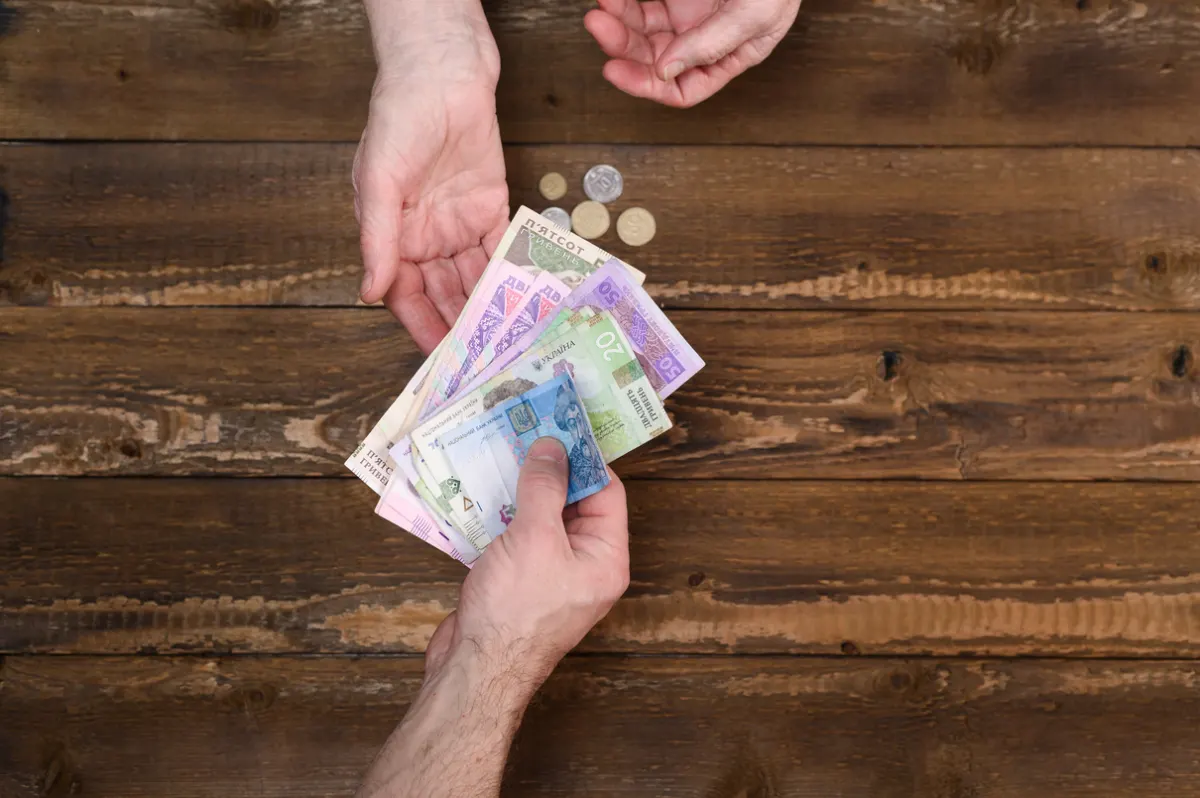
Be Careful with the Words “Tips Included”
It sounds very clear.
Still ask:
Which tips are included?
The wording may only cover part of the trip.
For example:
cruise crew,
driver,
guide,
luggage service,
hotel staff,
or local helpers.
It is possible that the cruise crew is covered while your private Egyptologist is not.
Or the driver is included but hotel tips are not.
So do not stop at:
“Tips included.”
Ask:
“Which tips are included exactly?”
It takes a minute before travelling.
It can remove a lot of uncertainty later.
Does All-Inclusive Mean Tips Are Included?
No.
This is a common misunderstanding.
When you book an all-inclusive hotel in Egypt, it usually refers to selected hotel services, such as:
meals,
some drinks,
snacks,
perhaps activities,
and other hotel services.
It does not automatically mean:
Every tip during your whole holiday has already been paid.
Housekeeping, luggage service or personal help can still be separate.
The same applies to tours.
A tour may include:
hotel,
transport,
entrance tickets,
lunch,
guide,
and vehicle.
That tells you nothing about whether gratuities are included.
Check tour inclusions and tipping arrangements separately.
What About Restaurant Service Charges?
Do not confuse these either.
A service charge on the bill is not necessarily the same thing as a personal tip.
When a service charge has already been added, you can still leave something extra if you were very happy.
You do not automatically need to repeat the same amount.
The simple approach:
Read the bill.
Which Is Better: A Tipping Package or Choosing Yourself?
Both can work.
A package may suit you when:
you dislike calculating small amounts all day,
you are taking a longer round trip,
you are going on a Nile cruise,
you want to know your costs before travelling,
or tipping makes you anxious.
Individual tipping may suit you when:
you prefer to decide personally,
you use relatively few services,
you want to reward particular employees directly,
and carrying small cash payments does not bother you.
There is no single correct method.
Transparency matters more.
Can You Give Extra Even When Tips Are Included?
Yes.
If your guide was outstanding, you can still give something extra.
If your driver was particularly helpful, the same applies.
A tipping package should remove pressure.
It should not stop you rewarding excellent service voluntarily.
Make a Simple Tipping Budget
If your trip does not use a package, make your own rough baksheesh budget.
You already budget for:
food,
excursions,
souvenirs,
drinks,
transport.
Tipping can simply become another small travel category.
Think about your type of trip.
Hurghada Beach Holiday
You may mainly need smaller amounts for:
hotel staff,
luggage,
housekeeping,
individual transfers,
and perhaps a day excursion.
Private Egypt Tour
Longer personal services become more relevant:
driver,
Egyptologist,
and perhaps other local guides.
Nile Cruise
The main question is how the crew gratuity system works.
These holidays are very different.
That is why a statement such as:
“Take €100 for tips in Egypt.”
is not especially helpful for everyone.
Keep Small Notes Separately
This is one of the easiest practical tricks.
Keep small Egyptian-pound notes in:
a side pocket,
a separate wallet,
or another easy-to-reach compartment.
Then you do not need to open your entire cash wallet every time you want to give a small tip.
It is easier and more discreet.
And Now: Sellers
Tipping is only half the topic.
The other half often begins with:
“My friend, just look!”
Or:
“Special price!”
Or the famous:
“Gift! No money!”
In busy tourist areas, selling can be far more direct than many visitors from Europe are used to.
That does not make every seller unpleasant.
It means a short, clear no usually works better than a long polite explanation.
Persistent Sellers in Egypt: How to Stay Friendly and Still Decide for Yourself
Alongside tipping in Egypt, sellers are one of the subjects that can make first-time visitors unsure.
You will not be hassled everywhere.
Hotels, restaurants, residential areas and quieter locations can feel completely normal.
Busy tourist attractions can be different.
There, many people earn money by speaking to large numbers of visitors in a short time.
You may notice more direct selling around:
the Pyramids of Giza,
major temples,
busy markets,
souvenir areas,
ports,
or popular viewpoints.
A seller may not wait for you to enter a shop.
They approach you.
Show you something.
Give you a price.
You say no.
They give you a lower price.
Now comes:
“My friend, just look.”
Or:
“No buy, just look.”
Or:
“Special price for you.”
It can be entertaining when you are in the mood.
When you are trying to reach a temple, it can become tiring.
The good news is that you do not need a complex strategy.
A short, clear no usually works better than a long conversation.
“La, Shukran”: Two Very Useful Words
To say no politely in Arabic, use:
La, shukran.
It means:
No, thank you.
Your pronunciation does not need to be perfect.
Your body language matters more.
If you really do not want to buy:
say no,
stop examining the item,
stay polite,
and keep moving.
A long explanation often works less well.
For example:
“No thanks, we have no room left in the suitcase and we are leaving tomorrow anyway…”
A determined seller may simply hear:
“The problem is suitcase space.”
Then comes:
“Small! Fits in bag!”
Now you are discussing luggage capacity.
“La, shukran” is clearer.
“It’s a Gift”: When the Gift Develops a Price
This is one situation worth knowing before your first trip.
Someone holds out:
a bracelet,
scarf,
small figure,
pendant,
or other souvenir.
You decline.
Then comes:
“Gift! Gift for you!”
You take it.
A moment later, money is requested.
Not every seller does this.
You simply need to know the situation can happen.
The easiest solution is:
If you do not want to buy it, do not take it.
Not “just for a second”.
Not for a photo.
Not because refusing feels impolite.
Leave it with the seller.
Then there is much less room for confusion.
Do Not Ask the Price If You Already Know You Will Not Buy
You see something interesting.
Out of curiosity you ask:
“How much?”
For the seller, that normally means:
This person may buy.
The negotiation begins.
If you immediately say:
“Oh, I was only asking,”
you have started a conversation neither side really needed.
If you are interested:
Ask.
Negotiate.
Compare.
Buy or walk away.
If you only want to look, simply look.
If You Want to Buy, Bargaining Can Be Fun
Not every seller interaction needs to be avoided.
Maybe you genuinely want:
spices,
a scarf,
jewellery,
a statue,
a bag,
handicrafts,
or another souvenir.
Then bargaining can be part of the experience.
A simple rule helps:
Decide what the item is worth to you.
You do not need to discover the mathematically perfect “Egyptian price”.
You only need a price you are happy paying.
Negotiate politely.
If you agree, good.
If not, that is also fine.
The seller can say no too.
A good deal is one both sides accept.
Do Not Buy Only Because You Feel Pressured
This can be difficult after a long conversation.
Maybe you were offered tea.
Maybe ten items were shown to you.
Maybe you think:
“I have to buy something now.”
You do not.
You can say:
“Thank you, but I’m not buying.”
Even after ten minutes.
It is polite not to spend half an hour bargaining if you knew from the start you had no intention of buying.
Still, a conversation does not create a purchase obligation.
Persistent or Harassing: Where Is the Line?
A seller can repeat a price several times.
That may be annoying.
Someone may walk beside you for a short distance.
That can also feel uncomfortable.
A different line is crossed when somebody:
deliberately blocks your way,
touches you,
keeps following after a clear request to stop,
insults you,
tries to intimidate you,
or makes threatening gestures.
At that point, your priority is not being extremely polite.
Move away.
Go towards:
your guide,
your driver,
site staff,
security,
or a busy public area.
You do not need to accept aggressive behaviour because you are a visitor.
Why a Guide Can Help
A good local guide is not only there to explain dates and pharaohs.
They also know:
how sites work,
entrances,
seller areas,
local habits,
and the language.
That can make first-time visitors feel much more comfortable.
If you do not want to shop, the guide can help keep the day moving.
If you do want to shop, they can explain where markets or shops are and what to expect.
You are still experiencing Egypt.
You simply have somebody available when you need help.
Children Selling or Asking for Money
This is more emotional.
In some places, children may:
sell small souvenirs,
ask tourists for money,
or approach visitors directly.
Many travellers find it much harder to say no to a child.
That is understandable.
You still do not need to give money simply because you feel uncomfortable refusing.
If you want to help, you may prefer supporting a reputable local or international organisation working with children and families.
A short tourist encounter usually does not tell you enough about the wider situation.
You can feel sympathy.
And still say no.
“Everyone Is Looking at Me”
Some travellers say:
“I felt as though people were staring at me.”
That can happen.
You may stand out because of:
appearance,
clothing,
language,
camera equipment,
or simply because you are obviously visiting.
There is another factor.
When you do not understand the language, your brain fills in gaps.
Two people speak Arabic.
One looks towards you.
Both laugh.
You may immediately think:
“They are laughing at me.”
Maybe they are.
Maybe they are talking about football.
Maybe somebody has just told a joke about his brother.
You do not know.
Try not to assign negative meaning to every glance.
At the same time, if a situation makes you uncomfortable, you are free to leave.
You do not need to convince yourself to stay somewhere you do not feel comfortable.
Preparation Makes Sellers Far Less Stressful
The first persistent seller may catch you completely off guard.
After a few days, your reaction may simply become:
“La, shukran.”
And you keep walking.
You know:
I do not take an unwanted “gift”.
I ask the price only when I am interested.
If I want to buy, I can bargain politely.
If I do not want to buy, I do not need a long explanation.
If selling turns into genuine harassment, I move away and ask for help.
That covers most situations.
Why Your Tour Operator Can Matter
A good tour operator cannot control every seller around every archaeological site.
That would be unrealistic.
They can control much more about your own tour.
For example:
who drives you,
who guides you,
how large your group is,
whether shopping stops are planned,
how extra costs are explained,
and whether you have somebody to contact when a problem occurs.
When it comes to tipping in Egypt, clear information is valuable.
If you know before travelling:
what is included,
which tips may be expected,
what remains voluntary,
and whether extra stops are planned,
you have fewer surprises.
Shopping Stops Are Not Tourist Attractions
Many travellers know this situation.
The itinerary lists temples, tombs and historical sites.
Then the vehicle unexpectedly stops at:
a papyrus shop,
perfume shop,
alabaster workshop,
jewellery store,
or souvenir shop.
Some travellers want those stops.
There is nothing wrong with that.
The problem comes when the stop is effectively compulsory and takes time away from the sights even though nobody wants to shop.
On a private trip, you should ideally be able to choose.
Want to shop?
A stop can be arranged.
Do not want to visit a shop?
That should also be possible.
On a long Luxor day, an extra hour at Karnak or the Valley of the Kings may be far more valuable than an hour in a shop you never planned to visit.
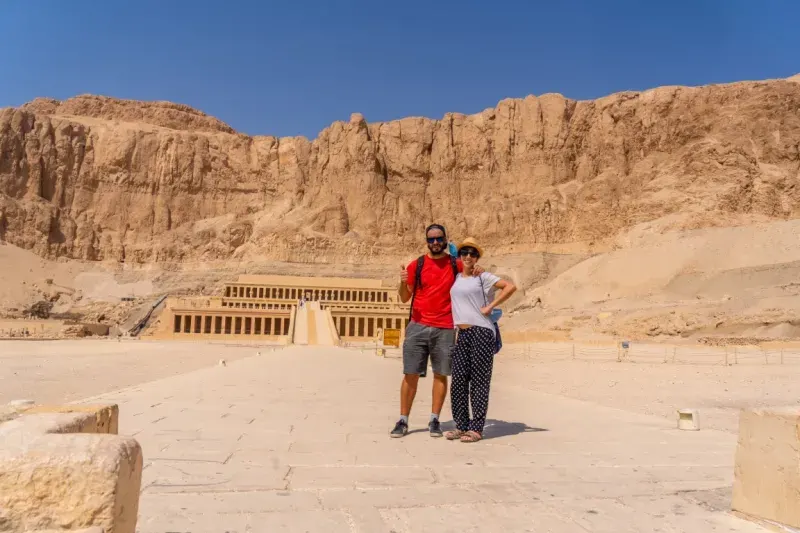
Luxor day tour featuring the Valley of the Kings, Karnak Temple, and the Temple of Hatshepsut. Private small group, German-speaking Egyptologist, no shopping stops, and 24/7 support.
From
Does Private Travel Automatically Mean Less Stress?
No.
A private tour is only as good as the company organising it.
Private simply means you are not travelling as part of a large unrelated group.
Possible benefits include:
fewer hotel collection stops,
easier communication,
your own guide,
more adaptable breaks,
and more control over the schedule.
It does not mean every private operator is automatically professional.
Check:
reviews,
clear inclusions,
contact details,
cancellation terms,
and experiences from previous guests.
Small can be personal.
Large can be professional.
Judge the actual operator.
Private Travel Does Not Mean Seeing Egypt Only Through a Car Window
A private trip should not create a bubble around you.
A good guide can help you experience more of everyday Egypt.
You can:
eat in local restaurants,
walk through markets,
travel on the Nile,
speak with people,
see smaller places,
and spend time outside resort areas.
The difference is that you have somebody with you who understands the language and local routines.
That can be reassuring on a first visit.
What If Your Driver or Guide Behaves Badly?
Make a clear distinction here.
A random seller at an archaeological site is not part of your booked tour.
If you are not interested, you move on.
Your:
driver,
guide,
transfer employee,
or another person working for your tour company
is different.
Tell the operator if there is:
aggressive pressure for tips,
insulting behaviour,
unexpected compulsory shopping stops,
major changes to the booked itinerary,
or other inappropriate conduct.
Keep the complaint factual.
Include:
the date,
tour name,
employee name if known,
and a short description of what happened.
A professional company can only respond when it knows there was a problem.
One Bad Moment Does Not Represent All of Egypt
After an unpleasant interaction, people naturally generalise.
One rude driver becomes:
“Drivers in Egypt are rude.”
Three persistent sellers become:
“Nobody leaves you alone in Egypt.”
The reaction is understandable.
It is rarely fair.
One seller at Giza represents Egypt about as accurately as one unpleasant airport taxi driver represents an entire European country.
At the same time, negative experiences should not be dismissed.
If you had several uncomfortable encounters, those experiences were real.
Both things can be true:
The situation was bad.
And:
It does not describe an entire country.
Egypt Can Be Tiring and Wonderful at the Same Time
That may be one of the fairest descriptions.
You can stand beneath the Great Pyramid in the morning and be speechless.
An hour later, a seller may annoy you.
In the afternoon, somebody may invite you for tea and treat you with remarkable warmth.
In the evening, a driver may start discussing tips.
The next day, an Egyptologist may take you through Karnak and tell you stories you remember for years.
Travel is rarely only one thing.
Egypt definitely is not.
Talking only about perfect sunsets leaves out part of the experience.
Reducing Egypt to baksheesh and sellers leaves out much more.
Preparation Changes Your Experience
The first persistent seller can feel stressful.
By the third encounter, you may simply say:
“La, shukran.”
And continue walking.
You know:
I do not take an unwanted gift.
I ask for a price only when I am genuinely interested.
I keep small notes ready.
Tipping is common, but not every interaction costs money.
I do not need to give more because somebody dislikes my tip.
I can leave when somebody becomes aggressive.
Stressful situations become short travel moments.
That is the goal.
Not fear.
Preparation.
Should You Still Visit the Pyramids?
Yes.
If stories about sellers around Giza have made you wonder whether to skip the site, that would be a great shame.
Prepare yourself.
Plan the visit well.
And focus on why you came:
the Great Pyramid,
Khafre,
Menkaure,
the Sphinx,
and more than 4,500 years of history.
Our detailed guide to the Pyramids of Giza covers tickets, history, visiting times and practical planning.
The better you understand what you want to see, the less likely every spontaneous offer is to pull you away from your plan.
What About Luxor?
The same idea applies.
When travelling from Hurghada, you probably want to see:
the Valley of the Kings,
Karnak,
Hatshepsut Temple,
the Colossi of Memnon,
and the Nile.
When comparing tours, do not look only at price.
Check:
group size,
guide,
entrance tickets,
shopping stops,
vehicle,
pick-up arrangements,
and how much time you actually get at the sights.
Our guide to a day trip from Hurghada to Luxor compares these points in detail.
15 Practical Tips for Avoiding Tipping Stress and Persistent Sellers
1. Ask About Tips Before You Travel
Ask your tour operator what is included and what you should roughly plan for.
2. Create a Tipping Budget
Baksheesh then becomes a normal travel expense rather than a new surprise every day.
3. Keep Small Notes Ready
It makes small tips easier and avoids unnecessary change discussions.
4. Tip for Service, Not Because You Fear a Reaction
A tip should be a thank-you.
Not a payment to avoid someone becoming unhappy.
5. Do Not Let Someone Push You to Add More After You Have Tipped
A simple:
“That’s the tip, thank you.”
is enough.
6. Do Not Accept Unwanted “Gifts”
If you do not want to buy, leave the item with the seller.
7. Learn “La, Shukran”
No, thank you.
Two words that can be very useful.
8. Do Not Explain Your No for Five Minutes
A clear no is easier to understand than a long excuse.
9. Ask the Price Only When You May Actually Buy
“How much?” can quickly start a negotiation.
10. Keep Walking After a Clear No
You do not need to stay until a sales conversation naturally ends.
11. Bargain Politely When You Want to Buy
Shopping can be enjoyable.
Both sides are allowed to reject a price.
12. Do Not Accept Aggressive Behaviour
If someone threatens, blocks or touches you, move away and get help.
13. Report Unprofessional Behaviour by Your Booked Staff
A tour operator can only deal with a problem when it knows about it.
14. Compare Tours on More Than Price
Group size, guides, shopping stops and organisation may matter more than a small price difference.
15. Do Not Let One Encounter Define the Whole Trip
Egypt is much bigger than the sales area outside a tourist attraction.
FAQ: Tipping, Baksheesh and Sellers in Egypt
Do I Have to Tip in Egypt?
Tipping is common in many service situations.
You do not need to give money to every person you meet.
Treat tipping as a voluntary recognition of a real service.
What Does Baksheesh Mean?
In everyday travel situations, baksheesh usually means a small tip or financial thank-you.
How Much Should I Tip in Egypt?
It depends on the service.
A short piece of help is not the same as a private guide accompanying you all day.
For restaurants, around 10% can be a useful guide when no service charge is already included.
For drivers, guides and multi-day tours, ask your operator for a current recommendation.
What Should I Do If Someone Demands More?
If you have already given something, you do not need to increase it.
Stay calm and firm.
“That’s the tip, thank you.”
is enough.
Are Tips Included in All-Inclusive Holidays?
Not automatically.
All-inclusive refers to the services included in your hotel or holiday package.
Tipping arrangements should be checked separately.
Is a Tipping Package a Good Idea?
It can work very well on round trips and Nile cruises.
The important point is knowing exactly which people and services it covers.
Can I Still Give Extra When Tips Are Included?
Yes.
If you were particularly happy with somebody’s service, you can always choose to give more.
Are Sellers Pushy Everywhere in Egypt?
No.
It varies greatly by location and situation.
Selling can be more direct around very busy tourist attractions.
What Does “La, Shukran” Mean?
“La, shukran” means “No, thank you.”
What Should I Do If Someone Gives Me a “Gift”?
If you do not want to buy anything, it is easier not to take the item in the first place.
That avoids later arguments about payment.
What Should I Do with Aggressive Sellers?
Move away.
If somebody threatens you, blocks you or becomes physical, speak to your guide, site staff or security.
Should I Give Money to Children?
That is a personal decision.
If you want to help, supporting a reputable organisation may be more useful than making a spontaneous payment when you do not understand the wider situation.
Are Private Tours More Relaxed?
They can be.
Smaller groups, your own guide and fewer hotel collection stops can make the day easier.
The quality still depends on the operator.
Should I Ask About Shopping Stops Before Booking?
Yes.
If you do not want papyrus, perfume, jewellery or alabaster-shop visits, ask clearly whether shopping stops are part of the programme.
Should Baksheesh and Sellers Stop Me Travelling to Egypt?
For most travellers, no.
These situations are much easier once you know what to expect and how to set friendly boundaries.
Final Thoughts: Enjoy Egypt Without Tipping Stress
Tipping in Egypt is part of the travel experience.
Baksheesh is common.
Persistent sellers also exist.
It helps to know both before you arrive.
Neither should define the way you experience the country.
Good preparation starts before departure.
Ask about:
tour inclusions,
tipping arrangements,
possible extra costs,
group size,
shopping stops,
and who to contact when something goes wrong.
Plan a small tipping budget.
Carry smaller banknotes.
Learn:
“La, shukran.”
And do not be afraid to say no politely.
At the same time, remember the other side.
Many people earn their living through tourism.
Good service deserves recognition.
A seller is allowed to offer you something.
You are allowed to decline.
Respect works in both directions.
Treat people politely.
Expect your no to be respected too.
That is the balance.
Once you are prepared, your attention can return to the things that brought you to Egypt in the first place:
a sunrise over the Nile.
The enormous columns of Karnak.
A royal tomb more than 3,000 years old.
The Great Sphinx.
Or the moment you stand beneath the Great Pyramid, look upwards and wonder how people built something so enormous more than 4,500 years ago.
Those are the moments you should remember after your Egypt holiday.
Not whether somebody thought your tip was too small.