Here is a confession from a company that sells pyramid trips for a living: Egypt has far more than three pyramids, and you do not need to see all of them. You need to see the right ones for you. Some people want the postcard shot with the Sphinx. Some want to stand where the whole idea of a pyramid was invented, ideally without a selfie stick in their ear. Most of us, being honest, want a bit of both and a lunch that does not involve a carpet showroom.
If you are staying in Hurghada, El Gouna, Makadi Bay, Sahl Hasheesh or Soma Bay, Cairo's pyramid fields are a long day away, so it pays to choose wisely. This guide walks you through Giza, Saqqara and Dahshur as a decision, not a checklist: what each one is actually like, who it suits, how much time you need and how to combine them. We will also be straight about what a day trip from the Red Sea coast really costs you in hours.
First, a 60-second pyramid history (no exam at the end)
The three sites are not three random piles of stone. They are chapters of one story, and once you see that, choosing between them gets much easier.
UNESCO lists the whole stretch as "Memphis and its Necropolis – the Pyramid Fields from Giza to Dahshur", the burial ground of Egypt's first capital, with more than thirty-eight pyramids in total. Djoser's Step Pyramid at Saqqara is regarded as the first pyramid ever built. That is chapter one: stacked platforms, built as a giant staircase to the sky, around 2667–2648 BC.
Chapter two belongs to Pharaoh Sneferu at Dahshur. His Bent Pyramid changed angle halfway up, from 54 degrees at the base to 43 degrees at the top, because the builders had to rethink the slope mid-construction. His Red Pyramid then got it right: it is the oldest surviving true, straight-sided pyramid, dated to roughly 2575–2563 BCE. Chapter three is Giza, where Sneferu's son Khufu and his successors took everything their predecessors had learned and went absolutely enormous.
So: Saqqara is the first draft, Dahshur is the editing process, Giza is the bestselling final version. All three together tell the full story. Any one of them tells part of it.
Giza: the one everybody has in their head
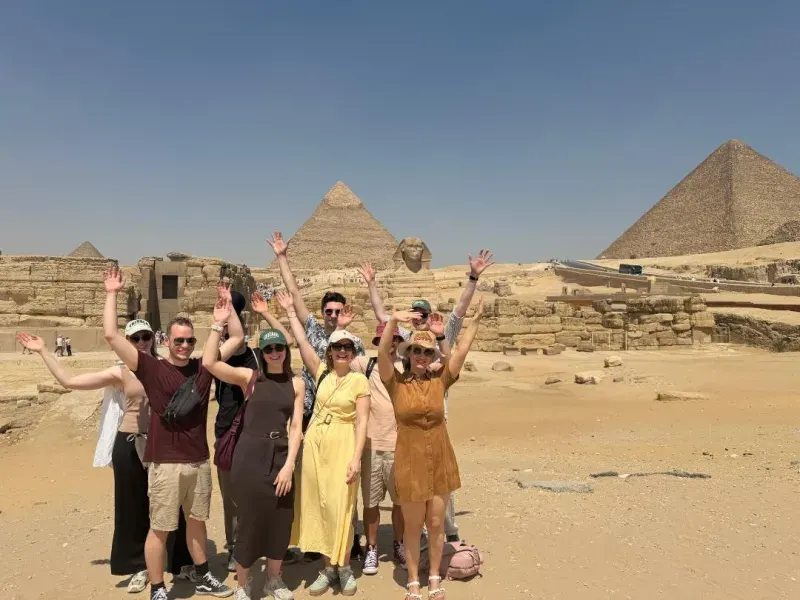
The Great Pyramid of Khufu, the pyramids of Khafre and Menkaure, and the Great Sphinx. This is the icon, and it earns the fame. Standing at the foot of the Great Pyramid and looking up at blocks the size of a small car is one of those moments that quietly rearranges your sense of scale.
What it is like: busy. Giza is the main stage, so expect coaches, camel touts and photographers who will cheerfully offer to "help" with your picture. None of it is dangerous, and a proper guide filters most of it for you, but it is not a silent, meditative site. If you have read our guide to tourist traps in Hurghada and Egypt, you will recognise the playbook.
Who it suits: first-time visitors, families with children who have been promised "the real pyramids", and anyone for whom the trip would feel incomplete without the Sphinx.
Time needed: two to three hours on the plateau is comfortable, including photo stops and the Sphinx. Going inside the Great Pyramid is a separate ticket, and it is a steep, low and hot climb through tight passages, so think carefully if you are claustrophobic, have a bad back or are travelling with small children. The inside is mostly bare stone; the exterior is the real show.
Our honest verdict: do not skip it, but do not make it your only stop. Giza alone is a great photo and a thin story.
If you want to go deeper on the plateau itself, our fact-packed article on the Pyramids of Giza in 2026 covers the details.
Saqqara: where it all began (and where you can hear yourself think)
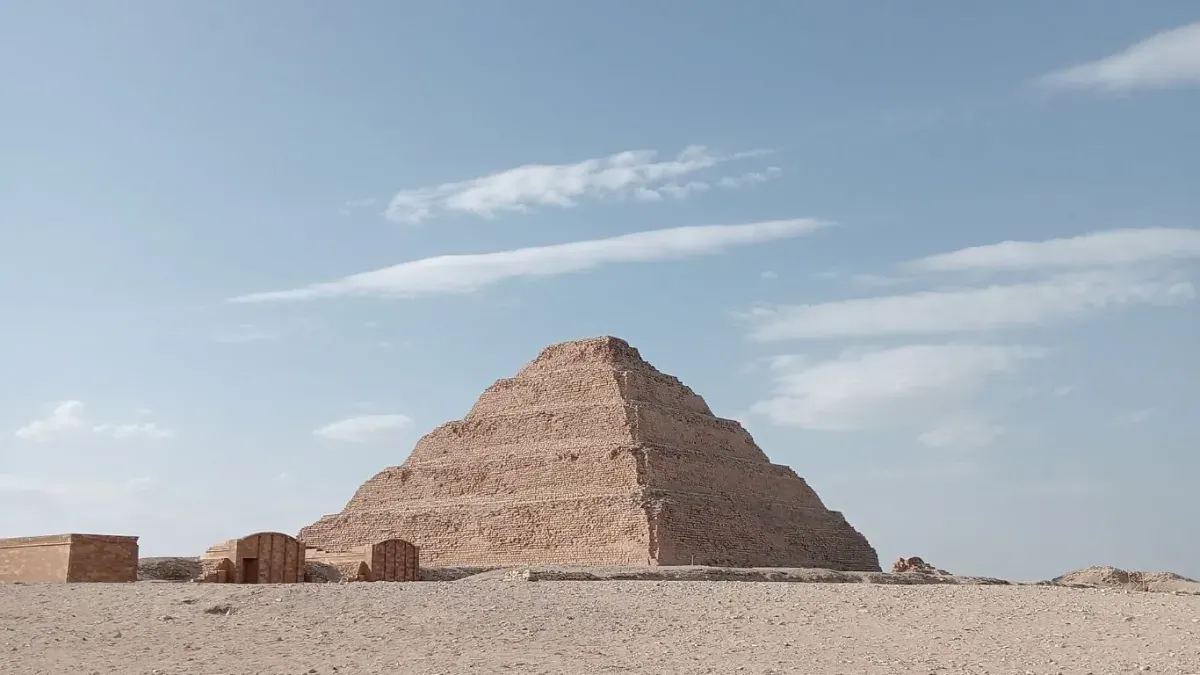
Saqqara is the oldest great pyramid site in Egypt and, for many travellers, the surprise favourite of the day. The star is the Step Pyramid of Djoser, designed by the architect Imhotep, who went on to become a legend in his own right. You can see the six rough steps rising out of the desert and, around it, a vast funerary complex of courtyards and colonnades that gives you a feel for how a pharaoh's afterlife was meant to look.
What it is like: calmer, more spread out and far more atmospheric than Giza. There is room to wander, and the light on the pale stone in the morning is lovely. You will still meet other visitors, but nothing like the Giza crowds.
Who it suits: history lovers, couples, photographers, and anyone who suspects they will enjoy the story of how pyramids were invented more than the sheer size of the biggest one.
Time needed: one and a half to two hours. A good Egyptologist is worth their weight in gold here because Saqqara is a site that rewards explanation. Without context it is a large pile of steps; with context it is the birthplace of monumental stone architecture.
One practical note: on our tour the Step Pyramid is part of the standard programme, but entering its interior follows a separate ticket structure and is not automatically included. Other areas of the necropolis are only visited if confirmed in advance, so tell us if there is a particular tomb or monument on your wish list.
Dahshur: the quiet one that quietly steals the show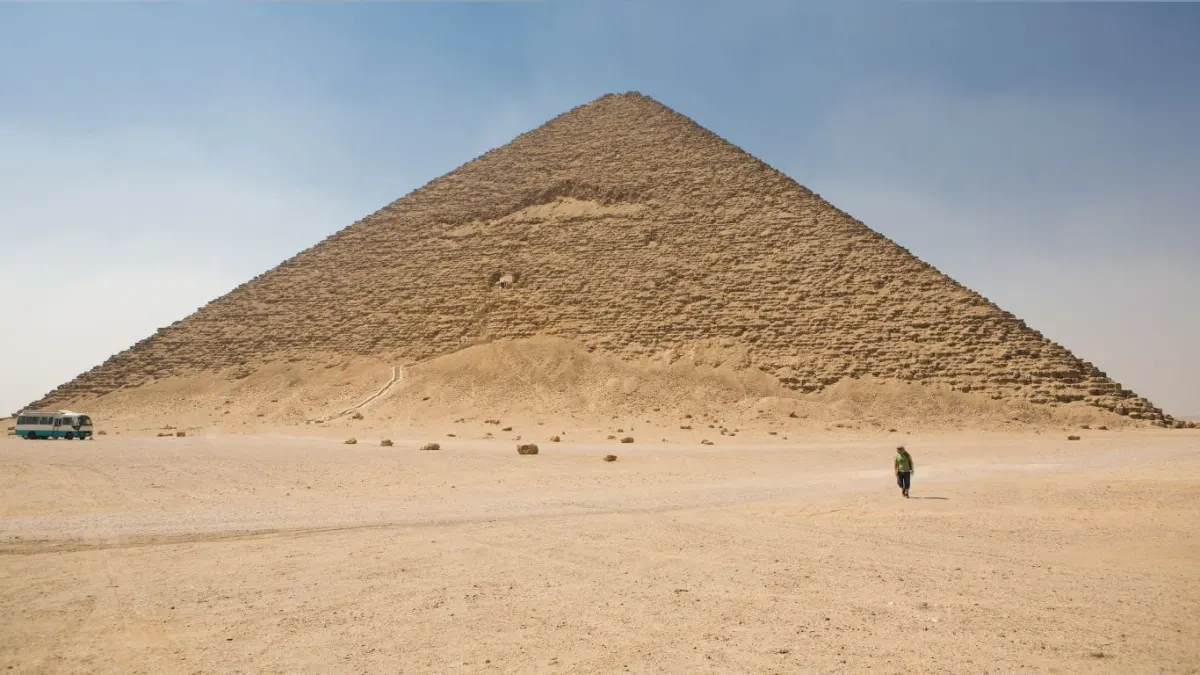
Dahshur is where the Bent Pyramid and the Red Pyramid stand, both attributed to Sneferu. It is about 40 km south of Cairo, and for decades it sat off the main tourist trail, which is exactly why it still feels special today.
The Bent Pyramid is the delightfully wonky one. It retains larger areas of its original smooth limestone casing than almost any other pyramid, so you can see what these monuments looked like when they were shiny rather than stepped and weathered. In 2019 Egypt reopened the Bent Pyramid and its satellite pyramid to visitors for the first time since 1965.
The Red Pyramid gets its name from the reddish colour of its exposed stone, and it was originally covered in white limestone. It is the oldest surviving true pyramid, and walking around it feels strangely intimate: you are often among a handful of people instead of hundreds.
What it is like: big sky, open desert, almost no touts. If Giza is a festival, Dahshur is a quiet Sunday walk.
Who it suits: second-time visitors, pyramid nerds, and anyone who has read about crowds at Giza and would like a calmer counterbalance.
Time needed: about an hour and a half for both pyramids from the outside. Interior visits may be possible depending on current rules, but they are not included in the standard ticket and involve steep passages, low sections, heat and tight spaces. Please confirm the opening status and your comfort level with us in advance rather than on the day.
So which one should you pick? Quick comparison
Site | Vibe | Crowds | Best for | Time on site |
|---|---|---|---|---|
Giza | Iconic, lively, photogenic | High | First-timers, families, Sphinx fans | 2–3 hours |
Saqqara | Historic, spacious, atmospheric | Low to medium | History lovers, couples | 1.5–2 hours |
Dahshur | Quiet, raw, almost empty | Very low | Repeat visitors, pyramid nerds | 1.5 hours |
Short on time or energy? Choose Giza plus one of the other two. Travelling with a history buff? Saqqara plus Dahshur makes a wonderfully quiet duo. Want the full story from first draft to masterpiece? Do all three, which is exactly what we built our private pyramid day around.
The all-in-one private pyramid day from Hurghada
Our private pyramid day starts very early in the morning with a hotel pickup. We confirm the exact time when you book. A short refreshment break is planned halfway to Cairo, and you travel by road only, in a private air-conditioned car or minibus with a professional driver. There is no 50-seat coach, no shuffling between tour groups and no planned shopping stops, so no detour to a papyrus or perfume "factory".
The usual flow is: the Step Pyramid at Saqqara in the morning, then Dahshur with the Bent and Red Pyramids, lunch at a selected local restaurant, and finally the Giza plateau with the three great pyramids and the Great Sphinx. The order can change because of opening hours, traffic or logistics, and your Egyptologist adapts as needed. The return to Hurghada depends on traffic and the programme; the whole day takes about 16 hours.
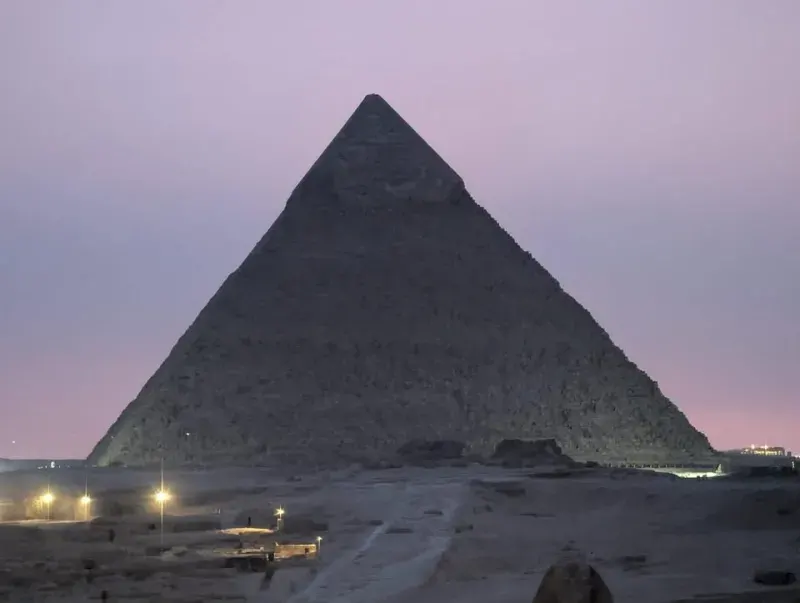
Private Pyramids Tour to Saqqara, Dahshur & Giza with a German-speaking Egyptologist. Discover the evolution of the pyramids – no shopping stops. Free consultation.
From
The tour takes about 16 hours door to door, and a long day deserves a plain-spoken warning: it is a lot of road. If that sounds like too much, you have two good alternatives, which we cover below.
What is included, and what is not
Included: private hotel pickup and return, a private air-conditioned vehicle, a German- or English-speaking Egyptologist, entry tickets for the standard programme sites, lunch, water and cola during transfers, local taxes and services, and no planned sales stops. Not included: personal expenses, tips, drinks at the restaurant, special interior visits or extra pyramid tickets unless confirmed in advance, and transfer surcharges from Marsa Alam (EUR 60 per person) or El Quseir (EUR 45 per person). Our tipping guide is here if you are unsure about etiquette: Tipping in Egypt.
Transparent pricing
Prices are per person and depend on group size. For two guests in a private car the price is EUR 160 per adult, and larger groups in a private minibus pay less per head, down to EUR 95 per adult for six to eight guests. Children aged 6–11 pay 50%, and children aged 0–5 travel free. You can cancel free of charge up to 24 hours before the tour. No hidden extras, no surprise "service charge" on the bus ride home.
A 16-hour pyramid day: who is it for?
It depends on who you are. The honest answer is that this day suits energetic travellers who want to see the pyramids in a single push and are happy to sleep in the car on the way home. Many couples and groups of friends love it precisely because it is efficient: three sites, one guide, one lunch, one trip.
If you are travelling with very young children, have limited mobility or simply prefer to savour your holiday, it may be smarter to split the experience. A flight-based Cairo day cuts the driving down dramatically; we compared the options in our guide to Cairo from Hurghada: flight or private van. And if your priority is a more relaxed pace, a two-day Cairo programme, with an overnight in the city, lets you see the pyramids in daylight without the very early alarm clock. Our Cairo and Alexandria private tour is one option to consider:
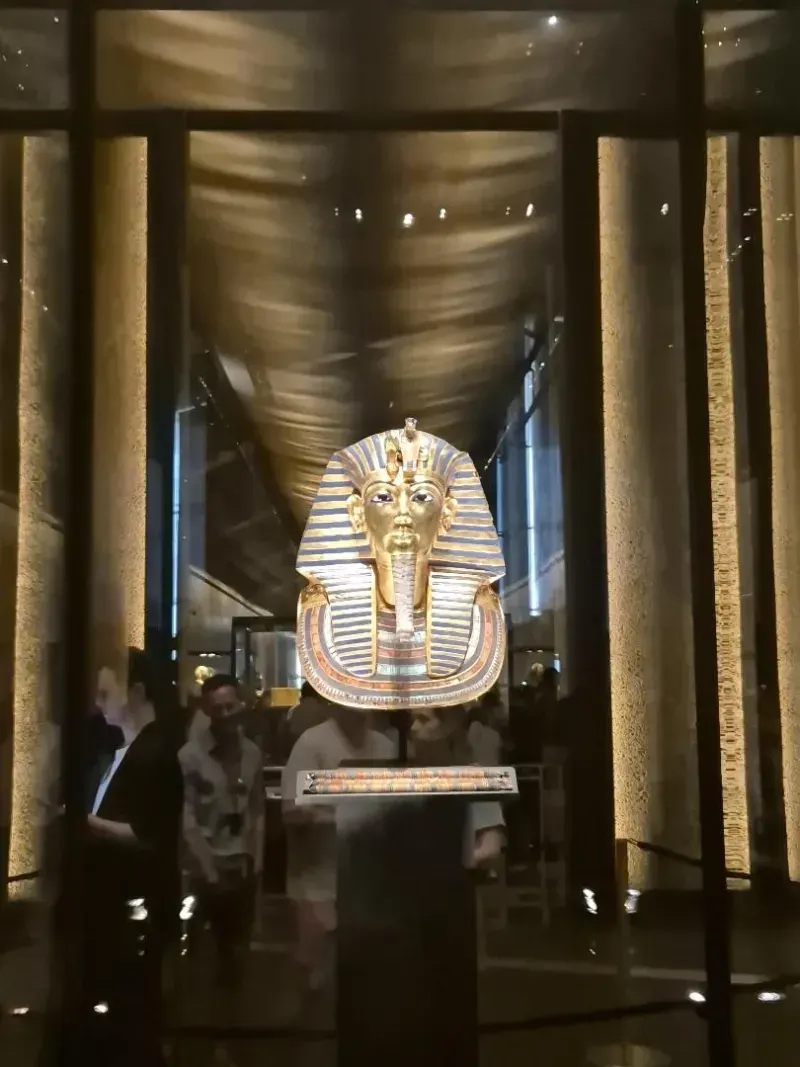
2-day Cairo & Alexandria tour by flight in a private small group with a German- or English-speaking Egyptologist. Explore the Pyramids, the Grand Egyptian Museum (GEM) & Alexandria – no planned shopping stops. Free consultation.
From
What about the Grand Egyptian Museum?
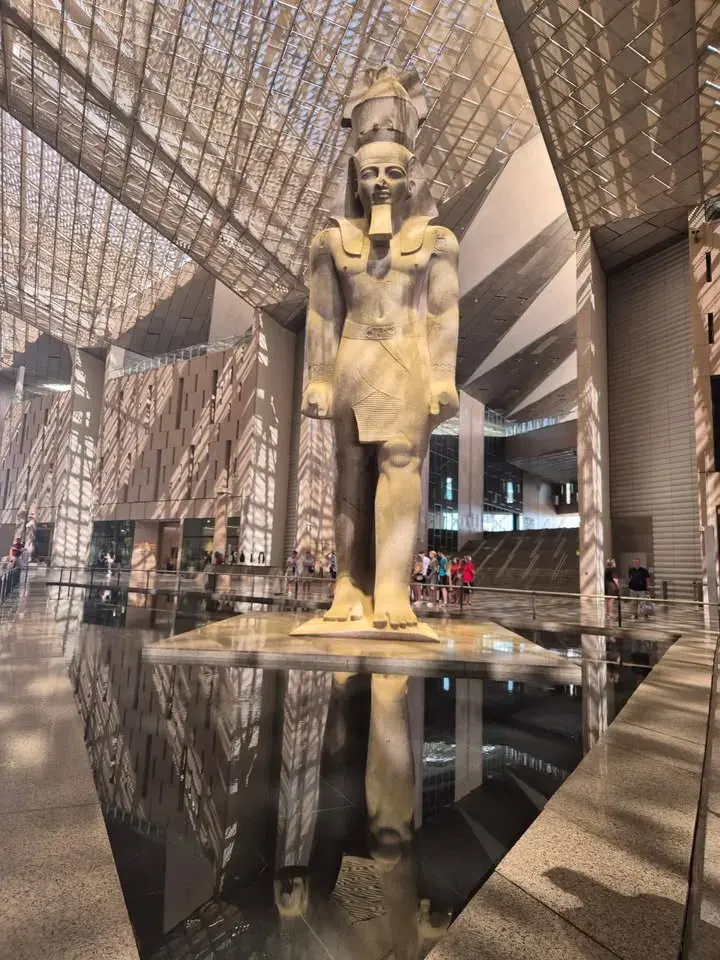
Good question, because it comes up in nearly every planning chat. The Grand Egyptian Museum is not part of this pyramid itinerary. The pyramids and the museum are two big days in their own right, and cramming both into one 16-hour road trip would turn a wonderful experience into a blur. If the museum is a must for you, read our guide to doing the Grand Egyptian Museum from Hurghada in one private day and consider booking it as its own trip, or choose a Cairo programme that combines both over two days.
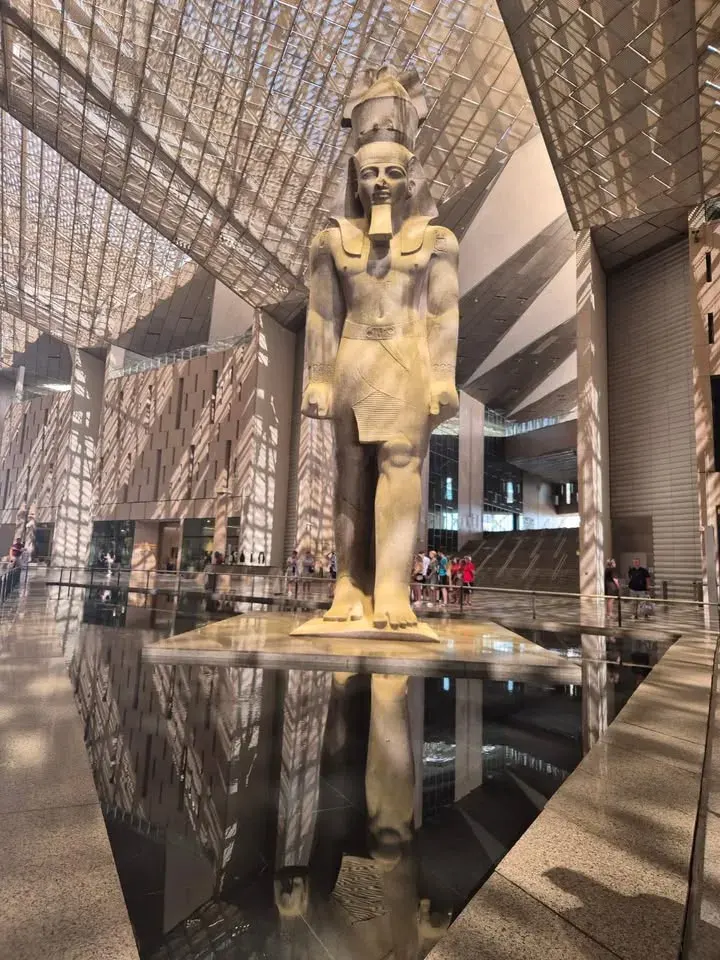
Experience the Grand Egyptian Museum exclusively: Full-day private tour with an Egyptologist, including lunch & coffee break inside the GEM. Unforgettable!
From
Practical tips for a smooth pyramid day
Dress in layers. Early mornings in the desert can be chilly, especially in winter, and the sun gets strong fast. Hat, sunglasses and sunscreen are non-negotiable.
Wear proper shoes. Sandy tracks and uneven stone are not kind to flip-flops.
Carry small cash for tips, but leave the haggling to your guide. If anyone offers you a "free" camel photo, the price will arrive later.
Be honest about the interiors. Narrow, steep, hot and low passages are not for everyone. Tell your Egyptologist beforehand and you will get an honest recommendation instead of a pushy sales pitch.
Check official travel advice before you go, for example the UK's FCDO travel advice for Egypt.
Drink water. Then drink more water. The desert is not impressed by your hydration plans.
Our recommendation, in one paragraph per type of traveller
First visit, family with children: go for the full private pyramid day if your kids can handle long journeys, or consider the two-day Cairo option for a more comfortable pace. Giza is the one they will remember.
Couple who loves history: prioritise Saqqara and Dahshur, and enjoy Giza as the grand finale. The quiet sites will give you the memories you will talk about long after you get home.
Repeat visitor who has "done Giza": ask us to focus your day on Saqqara and Dahshur and to slow the pace. You will see a different, calmer side of Egypt.
Cruise guest or short stay: a 16-hour road day may be too ambitious. Look at the Luxor day trip instead, which gives you a full temple experience in a more compact format. We lay it out hour by hour in our Luxor day trip timeline.
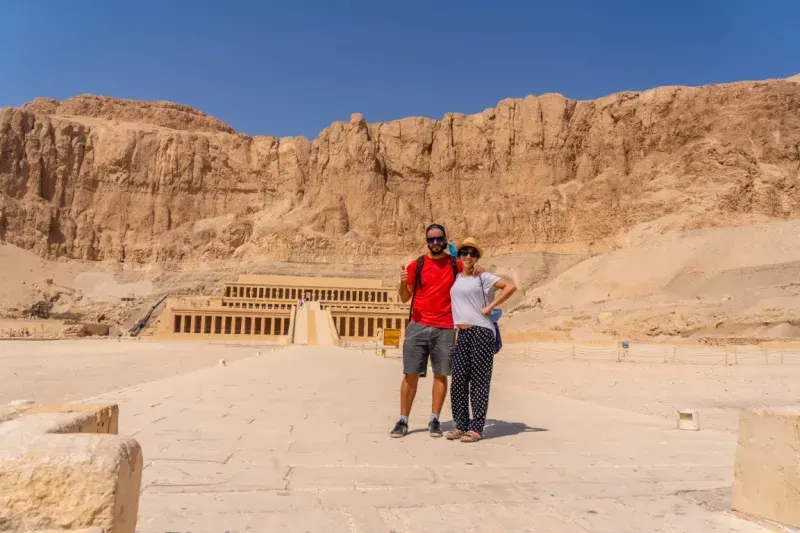
Luxor day tour featuring the Valley of the Kings, Karnak Temple, and the Temple of Hatshepsut. Private small group, German-speaking Egyptologist, no shopping stops, and 24/7 support.
From
And if you are still undecided, send us a message with your dates, your hotel and who is travelling. We will tell you honestly which option fits, even if that means talking you out of the longest day. That is what our private, Egyptologist-led service is for.
The pyramids have been waiting around 4,500 years for you. They can manage another few weeks while you pick the right day. Just make sure the tour has a lunch break and a driver who knows when to turn the air-conditioning up.