Cruise Excursions from Safaga Port: Private Trips to Luxor and Cairo on Your Own Terms
Cruise excursions from Safaga Port can become one of the most memorable days of an entire cruise.
In the morning, you may be looking across the Red Sea from your ship. A few hours later, you could be standing among the columns of Karnak Temple, inside the Valley of the Kings or at a viewpoint over the Nile.
There is a long drive in between.
That is why a good shore excursion does not begin in Luxor.
It begins with a clear meeting point at the port, a suitable vehicle and a timetable built around your ship’s departure.
Cruise passengers travel differently from hotel guests.
A hotel guest can delay a trip, return later or stay another night if something goes wrong. A cruise passenger does not have that freedom.
The ship leaves at a fixed time.
The gangway will not wait patiently because lunch took longer or somebody suggested one final shopping stop.
“Only ten minutes” also has an impressive ability to become 35 minutes during shore excursions.
Why Safaga Requires Careful Planning
Safaga is an important Red Sea port and one of the main starting points for road trips to Luxor.
You will not normally step off the ship into a small tourist town where cafés, taxis and travel offices are waiting beside an open promenade.
Safaga is an active working and passenger port. Security checks, access rules and vehicle permissions affect where drivers are allowed to collect guests.
The meeting point may vary depending on the ship, terminal and port arrangements that day.
A private driver may be able to enter a certain passenger area. In other cases, guests may need to use a port shuttle or walk to a pre-arranged exit.
The phrase “The driver will wait outside” is therefore not enough.
Outside where?
At which gate?
What name will appear on the sign?
Which telephone number reaches the driver?
What happens if the ship is cleared later than planned?
These questions should be answered before the excursion.
A useful meeting instruction may read:
“After the security check, continue to the main passenger exit. Your driver will wait on the right-hand side with a sign showing your name. If port access changes, you will receive a WhatsApp message that morning.”
That is much more helpful than:
“Do not worry, you will find us.”
The port is not a small sitting room, and your driver is unlikely to be the only person holding a name sign.
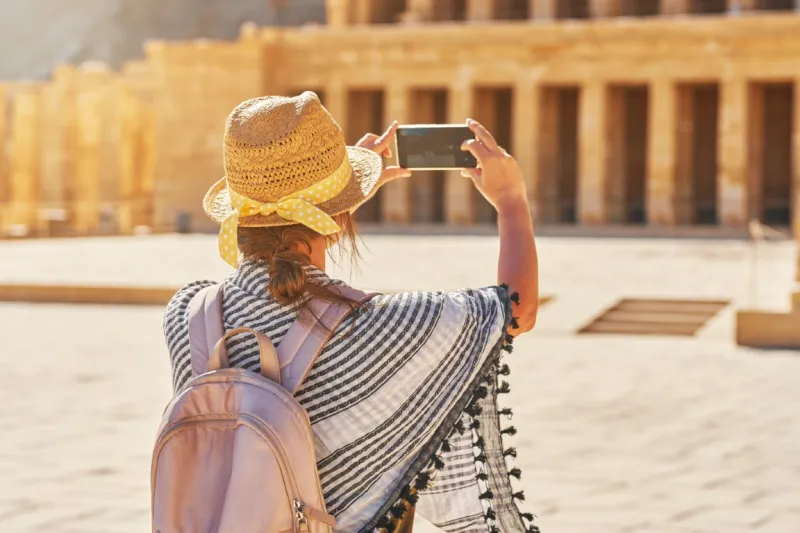
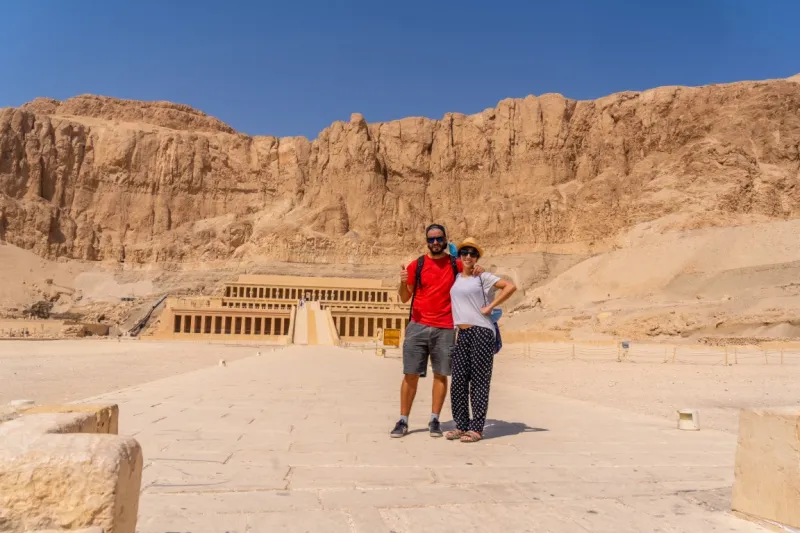
Private shore excursion to Luxor from Safaga with a German-speaking Egyptologist, direct port pickup & guaranteed timely return. Small group. Free consultation.
From
What Does “Independently” Mean?
For Safaga Port excursions, travelling independently does not necessarily mean leaving the ship without preparation and looking for a random vehicle outside.
It normally means arranging the shore excursion without booking it through the cruise line.
You organise:
a private driver,
a suitable vehicle,
a guide in your preferred language,
admission tickets or a complete package,
and a timetable with a safe return to the ship.
You do not need to research every temple story yourself or manage navigation, tickets and toilet breaks during the drive.
An independent excursion can still be fully organised even when it is not sold by the cruise line.
The main differences are usually group size and flexibility.
Instead of travelling with a large coach and many other passengers, you may travel only with your partner, family or private group.
This often allows more control over breaks and sightseeing times.
A private excursion is not automatically better.
Quality depends on the company, vehicle, driver, guide and planning. A private tour can still be poorly organised, begin late or include too many stops.
Do not ask only:
“How much does the tour cost?”
Also ask:
Where exactly is the collection point?
When does the tour genuinely begin?
What return time is planned?
How large is the safety margin?
Which entrance fees are included?
Is the guide licensed?
Are shopping stops included?
What happens if port clearance is delayed?
Who can be contacted on the day?
The lowest price is not much help when the meeting point is unclear or the timetable is so tight that a slightly longer toilet break creates panic.
Luxor and Cairo Are Not Equally Easy to Reach
Luxor is the classic destination for cruise excursions from Safaga Port.
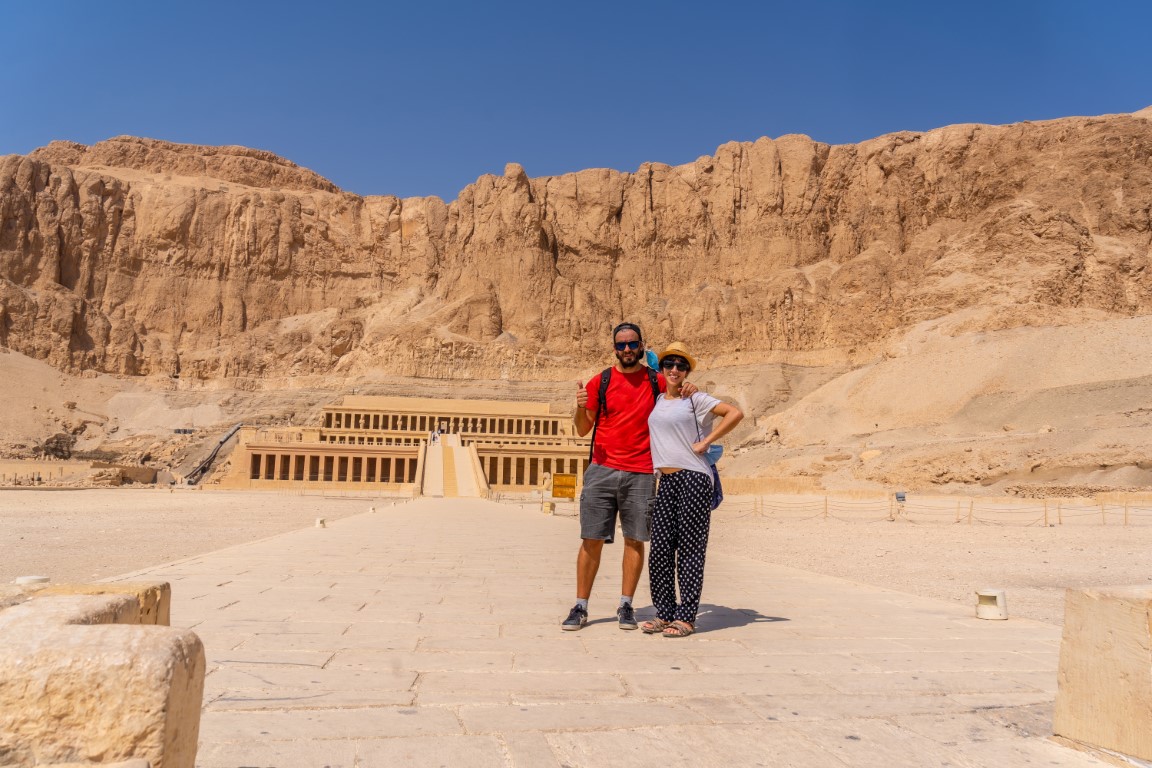
The drive is long, but it can fit into a full day when the ship has a suitable port stay. Many visitors see Karnak Temple, the Valley of the Kings, Hatshepsut Temple and the Colossi of Memnon.
Cairo is much farther away.
A normal same-day road excursion is not sensible during many Safaga port calls because the return journey takes too long.
Cairo may be considered when the ship remains in port for a very long time or stays overnight. A domestic flight through Hurghada may also be examined, depending on the schedule.
A responsible operator should first ask for your ship and exact port times.
They should not confirm Cairo until transfers, flights, sightseeing and a large return margin have been checked.
Sometimes the correct recommendation is:
“Luxor fits well. Cairo is too risky during this port call.”
That may sound less dramatic than an immediate yes.
For a passenger who must be back on board, it is the more useful answer.
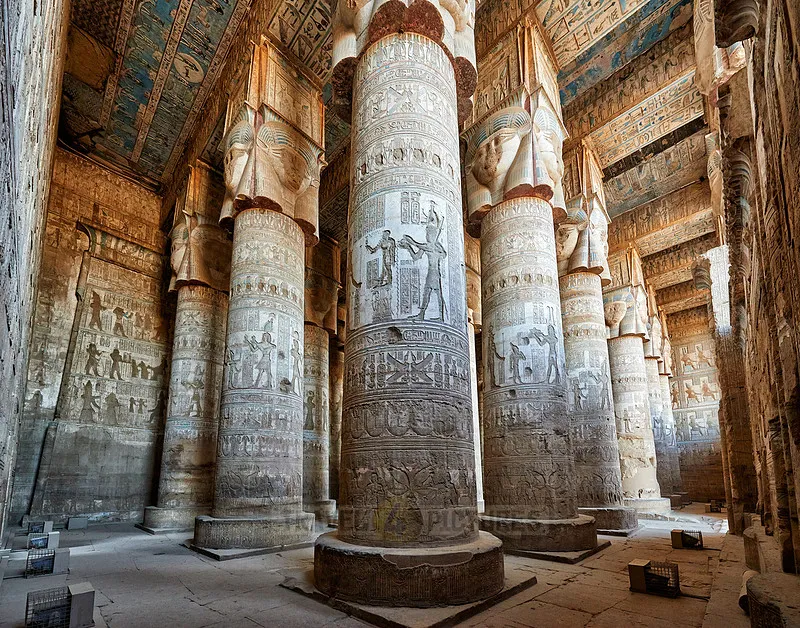
Private shore excursion to Dendera from Safaga with a German-speaking Egyptologist. Explore the Temple of Hathor & Qena. Small group. Free consultation.
From
Why WhatsApp Helps with Planning
Arrival times, clearance procedures and meeting points can sometimes change during cruise calls.
Direct WhatsApp contact can make coordination easier.
Your first message should include:
cruise ship name,
date of the Safaga call,
planned arrival time,
planned departure time,
number of passengers,
preferred destination,
guide language,
and any special requirements.
A useful enquiry may look like this:
“Hello, we will arrive in Safaga on 18 November aboard Mein Schiff 6. The ship is scheduled to stay from 6 am until 10 pm. We are four adults and would like a private Luxor excursion with a German-speaking guide. Where will collection take place, and what time would we return to the port?”
That gives the operator enough information to start checking whether the plan works.
A photograph of the cruise ship may be attractive.
For planning purposes, the ship’s name and port times are slightly more valuable.
A good Safaga excursion should not try to squeeze the largest possible number of stops into the smallest possible amount of time.
It should give you a memorable day in Egypt without making you check the clock every three minutes on the return drive.
The goal is simple:
You want to experience Luxor or another destination.
You also want to return to your ship on time.
Private Tour or Cruise-Line Excursion: Which Option Is Better from Safaga Port?
Many passengers considering cruise excursions from Safaga Port face the same decision:
Should I book through the cruise line or arrange a private tour?
Both options can work well.
The better choice depends on how much convenience, flexibility, personal attention and responsibility you want.
A cruise-line excursion provides a structured programme and direct coordination with the ship. A private tour can offer a smaller group, a more flexible pace and more time at selected sights.
This does not mean cruise-line tours are automatically poor and private excursions are automatically perfect.
A large coach tour may be organised extremely well.
A private tour may be badly planned.
The key question is not only who sells the excursion.
What matters is whether the timetable is realistic, who is reachable on the day and how the return to Safaga Port has been protected.
Main Differences at a Glance
Point | Cruise-Line Excursion | Private Shore Excursion |
|---|---|---|
Booking | Directly through the cruise company | Directly with a local operator |
Group size | Often a larger coach | Usually your family or a small group |
Meeting point | Organised through the ship | Must be clearly confirmed beforehand |
Schedule | Fixed programme | Often adjustable |
Guide | Shared with the group | Can be private to your party |
Pace | Based on the full group | Can be adapted more closely to you |
Shopping stops | May form part of the programme | Should be discussed in advance |
Return planning | Coordinated with the ship’s excursion system | Managed by the private operator and passengers |
Day-of contact | Through the excursion desk or ship staff | Ideally direct by WhatsApp and phone |
Price | Often charged per person | Often priced by vehicle or private group |
These are common differences, not fixed rules.
The actual experience depends on the cruise line, operator, ship, group size and package.
Advantages of a Cruise-Line Excursion
A cruise-line excursion is the simplest choice for many passengers.
You book through the same system as the cruise, receive instructions on board and meet your group at a clearly stated time.
Common advantages include:
Meeting arrangements are explained by the ship.
The timetable is designed around the known port stay.
Tour staff remain connected with the cruise programme.
You do not need to research an outside operator.
Changes are often communicated directly on board.
Payment and booking are handled through the cruise account or booking system.
This may feel reassuring, especially on a first cruise.
You do not need to work out which port gate is being discussed or whether the driver has permission to enter a certain area.
You follow the ship’s instructions and board the assigned coach.
It may not be especially personal.
It is straightforward.

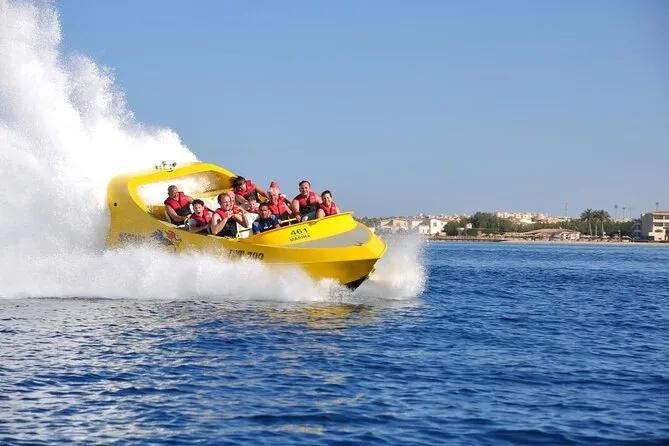
Shore excursion from Safaga: Quad & buggy safari, Bedouin village, camel ride & BBQ. Perfectly timed to match your cruise ship’s port stay.
From
What Happens If a Cruise-Line Tour Is Late?
Many passengers choose a cruise-line excursion because they feel safer if the tour returns late.
When an excursion has been officially organised by the ship, the cruise team knows the group is still out and can assess the situation directly.
The response to a delay depends on the circumstances, cruise line, port and sailing schedule.
You should not assume that a ship will wait forever under every possible condition.
The important difference is that the cruise line normally knows where its official excursion is.
During a private tour, you remain responsible for returning on time.
That does not make private tours automatically dangerous.
It means the timetable must be built with much greater care.
Possible Disadvantages of a Large Cruise-Line Tour
A large coach must move many people together.
This can create waiting time:
before everybody boards the coach,
during toilet stops,
while entering and leaving the vehicle,
at ticket checks,
during lunch,
and after each sightseeing stop.
The guide also needs to choose a pace that works for the full group.
Some guests want to study every inscription.
Others feel they have seen enough temple after ten minutes and begin looking for the café.
A group timetable cannot satisfy every person at the same time.
Photography stops may also be limited. If the coach must leave, you cannot simply decide to spend another 30 minutes at the Colossi of Memnon.
The schedule belongs to the group.
Not to your camera.
Why Do Cruise Passengers Choose Private Tours?
Private Safaga Port excursions are often chosen because passengers want more control.
You travel only with the people included in your booking. This may be a couple, a family, friends or a small private group.
Possible advantages include:
less waiting,
direct access to the guide,
a more adaptable pace,
flexible breaks,
more room in the vehicle,
and greater control over which attractions matter most.
A family may need more toilet breaks and shorter historical explanations.
A couple with a strong interest in ancient history may want more time at Karnak.
Older guests may prefer shorter walks and regular seated breaks.
A private tour can often respond more easily to these needs.
They still need to be explained before booking.
A driver cannot automatically know that somebody walks slowly or needs a break every 40 minutes.
Telepathy is rarely included in the vehicle equipment.
Does “Private” Mean Complete Freedom?
Not quite.
A private tour from Safaga remains limited by:
opening times,
the drive to Luxor,
traffic and checks,
the ship’s return time,
port rules,
and the actual length of the port call.
You can adjust the programme.
You cannot negotiate the distance between Safaga and Luxor into becoming shorter.
A private tour gives flexibility within a safe structure.
It should not become a competition to see how many temples, tombs and photo stops can be pushed between two port gates.
Is a Private Tour Cheaper?
That depends on group size and what the price includes.
Cruise-line excursions are commonly priced per person.
Private tours may be priced per person, vehicle or group.
For a solo passenger, a private vehicle may be much more expensive.
For four, six or more guests, the per-person price may become more attractive.
Do not compare only the final number.
Check whether the price includes:
vehicle,
driver,
port collection,
return journey,
German-speaking or English-speaking guide,
entrance tickets,
lunch,
drinks,
parking,
possible port permissions,
and tips.
A tour that appears cheaper may cost more once entrance fees, guide and lunch are added.
A higher package price may be easier to understand.
The better question is not:
“Which number is smaller?”
It is:
“What do I receive for this number, and what will still need to be paid?”
Does a Private Tour Automatically Include a Guide?
No.
Some private offers include only a vehicle and driver.
The driver takes you to the sites but may not be allowed to provide a full historical tour inside temples and tombs.
Other packages include a licensed guide for the entire Luxor day.
Check:
Is a guide included?
Which language does the guide speak?
Do they accompany you inside the attractions?
Do they meet you in Safaga or only in Luxor?
Is the guide private or shared?
“German-speaking assistance” can mean several things.
It may mean a German-speaking Egyptologist.
It may also mean somebody on the telephone knows a few German phrases.
Ask clearly.
Can You Refuse Shopping Stops?
Shopping stops are part of some excursion programmes.
They may include an alabaster workshop, papyrus shop, perfume shop or souvenir outlet.
These stops are not automatically bad.
Some passengers enjoy looking at local products or buying a keepsake.
Others have limited time in Luxor and prefer to spend it at the archaeological sites.
With a private tour, state in advance whether you want shopping stops.
A clear message is:
“We do not want compulsory shopping stops. Please use the available time for sightseeing and a safe return to the ship.”
Ask for written confirmation.
Otherwise, “No problem” may become:
“Only five minutes. You do not have to buy anything.”
Those five minutes sometimes display remarkable endurance.
Which Option Works Better for Families?
Families can choose either a cruise-line excursion or a private tour.
A private vehicle often gives more flexibility for:
child seats,
breaks,
snacks,
toilet stops,
naps,
and a shorter sightseeing plan.
A cruise-line excursion may be simpler to organise and offers clear onboard instructions.
With young children, price should not be the only deciding factor.
Check:
How long is the journey?
Is a suitable child seat available?
How many places will be visited?
Is there shade?
Can the tour be shortened?
Is the vehicle large enough for a pushchair and bags?
Luxor remains a long day.
A private minivan does not reduce a three-hour drive to twenty minutes.
It may make those three hours more comfortable.

Shore excursion from Safaga to Sharm El Naga: Snorkel at the vibrant house reef, relax on the sandy beach & enjoy a perfectly organized cruise excursion.
From
Which Option Works Better for Older Guests or Limited Mobility?
A private excursion can help when walking distances, vehicle access or regular breaks are important.
Ask about:
the vehicle type,
entry height,
wheelchair storage,
walking distances,
stairs,
uneven ground,
and whether the programme can be shortened.
Cruise lines also sometimes offer excursions marked as easier or more accessible.
Read the description carefully.
“Easy” does not always mean flat, step-free and short.
An ancient temple does not gain a lift because the excursion brochure uses a friendly colour.
Which Option Is More Reliable?
Reliability does not depend only on whether a tour is private or cruise-line organised.
It depends on the people and systems behind it.
For a private operator, check:
recent reviews,
clear contact details,
written confirmation,
complete prices,
experience with cruise passengers,
realistic return times,
and a reachable day-of contact.
Experience with Safaga Port matters.
A company may run excellent hotel transfers in Hurghada and still have little experience with port gates, cruise clearance and strict sailing times.
A shore excursion is not the same as an ordinary holiday day trip.
The clock is less forgiving.
How Much Return Time Should a Private Tour Allow?
A private tour should not aim for the final possible minute.
The vehicle should return considerably earlier than the official departure time.
The exact margin depends on:
all-aboard time,
distance,
traffic,
road conditions,
possible checks,
port procedures,
and ship instructions.
The “all aboard” time matters more than the scheduled sailing time.
If the ship leaves at 8 pm, that does not mean you should arrive at the port gate at 7.58 pm.
Passengers may be required back much earlier.
The operator therefore needs both:
scheduled sailing time,
and latest passenger return time.
When Is the Cruise-Line Tour the Better Choice?
It may suit you better when you:
are taking your first cruise,
want to organise as little as possible,
do not want to research an outside company,
are happy with a fixed group programme,
and prefer receiving instructions directly on board.
When May a Private Tour Be Better?
It may suit you better when you:
prefer a small group,
want your own guide,
want more control over pace,
want longer at selected sites,
want to avoid shopping stops,
have particular mobility or family needs,
and are willing to book a realistic plan with a strong return margin.
The Most Useful Decision Test
Do not automatically book the cheapest or longest tour.
Choose the tour that clearly answers:
Who collects you?
Where does collection happen?
What is included?
Who is the guide?
When does the return journey begin?
What time should you reach the port?
How large is the safety margin?
Who can be contacted on the day?
A private excursion should not only feel more personal.
It should be planned as carefully as an official tour.
A beautiful Luxor route is important.
A vehicle that begins the return journey on time is equally important for cruise passengers.
WhatsApp Message for Comparing Offers
“Hello, we will arrive in Safaga aboard [ship name] on [date]. The port stay is from [time] to [time], and all aboard is at [time]. We are [number] passengers and are interested in a private Luxor excursion with a [German-speaking/English-speaking] guide. Please confirm the meeting point, planned return time, included services, vehicle type and total price.”
This allows you to compare more than two prices.
You compare two complete day plans.
Collection at Safaga Port Step by Step: Meeting Point, Port Gate and WhatsApp Contact
For cruise excursions from Safaga Port, the meeting point can decide whether the day begins calmly or becomes unnecessarily confusing before the drive to Luxor has even started.
Safaga is an active seaport, not an open holiday marina beside the ship. Passenger movements are affected by security areas and access permissions.
The most important point is:
The exact meeting point should be confirmed for your specific call.
Not for Safaga in general.
Not only for the cruise line.
For:
your ship,
your date,
your berth,
the port arrangements,
and your chosen operator.
A driver may have permission to enter a passenger area on one day. During another call, collection may take place at a port gate or agreed exit.
A proper confirmation therefore says more than:
“We collect you at the port.”
It explains:
where to walk,
how to recognise the driver,
whether a shuttle is needed,
approximately how long the process takes,
and whom to call if access changes.
The difference between “port collection included” and useful collection instructions is often about five complete sentences.
Those five sentences can be very valuable in the morning.
Step 1: Send the Ship Name and Port Times
Before confirming a meeting point or route, the operator needs your main ship details.
Send:
full ship name,
date in Safaga,
planned arrival,
planned departure,
all-aboard time,
and preferably a screenshot from the itinerary.
All aboard is more important than the advertised sailing time.
A ship that leaves at 10 pm may require every passenger back by 9.30 pm.
The operator should know this in writing.
A useful message is:
“Hello, we will arrive in Safaga on 18 November aboard Mein Schiff 6. The planned port stay is from 6 am until 10 pm. All aboard is 9.30 pm. We are four adults and would like a private Luxor excursion.”
The message:
“We are coming on a cruise in November”
is about as useful for precise planning as:
“We will meet later somewhere in Egypt.”
Step 2: Ask When You Can Actually Leave the Ship
The scheduled arrival time is not always the same as the moment you can stand beside the driver.
After docking, procedures may take place before passengers are allowed ashore.
Ticket distribution, onboard meeting arrangements or priority for official excursions may also affect independent passengers.
Do not automatically plan:
Ship arrives at 6 am, vehicle leaves at 6.05 am.
That is ambitious.
Not in a helpful way.
Check:
When is disembarkation expected to begin?
Do independent guests need a specific departure slot?
Is the ship docked directly or using tenders?
Is a port shuttle provided?
Is there a separate exit for private excursions?
Which documents must be carried?
A private operator should use a realistic collection time.
A message may say:
“Collection will take place approximately 45 minutes after official clearance. Please send a WhatsApp message when you are allowed to leave the ship.”
That is more practical than fixing a time based only on the scheduled arrival.
Step 3: Confirm the Exact Meeting Point in Writing
The operator should state:
gate name or description,
driver position,
name on the sign,
driver’s name and telephone number,
vehicle type,
registration number when available,
and a map point or photo of the meeting area.
A useful confirmation might read:
“After leaving the passenger area, follow the signs towards the main exit. Your guide will wait on the right-hand side after the security point with a sign showing ‘Müller Family’. We will send the driver’s name, number and a meeting-point photograph on the morning of the tour.”
The exact wording will depend on the day’s rules.
What matters is that the message says more than:
“The driver will wait in front of the ship.”
An operator should promise collection beside the ship only when they genuinely have access for that call.
The safest meeting point is not the one that sounds most convenient in an advert.
It is the one both passengers and driver are actually allowed to reach.
Step 4: Check Whether a Port Shuttle Is Required
Passengers may not be allowed to walk freely through working port areas.
A shuttle may operate between the ship and passenger exit.
Ask:
Do we need to use a shuttle?
Is it free?
Where do we leave it?
Does the guide wait at the shuttle stop or beyond the gate?
How often does the shuttle run?
How much extra time should be allowed?
“Take the shuttle” is not a complete instruction.
The useful second half is:
“And where exactly do we go after leaving it?”
A company familiar with the port should be able to explain the route clearly.
Step 5: Identify the Correct Driver and Vehicle
Several vehicles and guides may be waiting during a cruise call.
A name sign helps.
It should not be the only check.
Compare:
company name,
driver or guide name,
telephone number,
vehicle type,
registration,
destination,
and booking name.
The correct driver should know:
your name,
expected number of passengers,
ship,
destination,
and agreed return time.
Do not enter a vehicle simply because somebody asks:
“Luxor?”
Many people at Safaga may be travelling to Luxor.
The destination is not a particularly secure password.
Ask:
“Which booking name are you waiting for?”
and:
“Which company confirmed the tour?”
A professional guide will understand.
Step 6: Test WhatsApp Before the Excursion Day
Direct WhatsApp contact helps with:
changed clearance times,
altered meeting points,
delayed disembarkation,
shuttle problems,
and finding the driver.
Save:
the company number,
driver or guide number,
emergency contact,
port-agent number from the ship’s information,
and the number of another person in your group.
Make sure your phone works in Egypt.
You may need:
roaming,
an eSIM,
a local SIM,
or ship Wi-Fi before leaving.
Do not depend entirely on free Wi-Fi being available at the port gate.
Take screenshots of:
confirmation,
meeting point,
map location,
driver name,
telephone numbers,
vehicle details,
and planned return time.
You can then open them even when mobile data decides to stop working at the least useful possible moment.
Technology has a strong sense of timing.
Step 7: Send a Message When You Leave the Ship
Once you know you can disembark, send a short message:
“Good morning, we are now allowed to leave the ship and expect to reach the meeting point in about 15 minutes.”
Or:
“We are in the port shuttle and will message again after getting off.”
If clearance is delayed, say so:
“The ship has not yet been cleared. We are waiting on board and will contact you as soon as we are allowed ashore.”
A delayed disembarkation is not necessarily your fault.
It should still be communicated.
A driver who hears nothing for an hour does not know whether you are still on board, lost near a gate or have decided to spend the entire day at the buffet.
Step 8: Do Not Walk to Another Gate Without Contact
If the driver is not immediately visible, call or send WhatsApp first.
Do not independently walk towards another exit.
Working ports may have several entrances, fences and restricted areas.
A distance that looks short on a map may be separated by security zones.
Write:
“We are standing beside [visible sign or building]. Please send your location or a photograph.”
Useful landmarks include:
exit number,
building colour,
sign,
shuttle stop,
security point,
or visible gate.
Less useful is:
“We are outside.”
That describes an impressive number of people at the port.
Step 9: Agree on a Waiting Time and Backup Contact
Before the day, clarify:
How long will the driver wait?
Which number should be called first?
Is there a second number?
Is a replacement driver available?
What happens if the vehicle breaks down?
Who decides when the route must be shortened?
At what point is Luxor no longer safe to attempt?
The final question matters.
If disembarkation is delayed by several hours, the original full route cannot simply be completed faster.
Possible alternatives include:
removing one attraction,
shortening lunch,
choosing a nearer destination,
or cancelling when safe return is no longer realistic.
That may be disappointing.
It is still better than leaving for Luxor with an impossible timetable.
A good operator protects more than the booking.
They protect your return to the ship.
Step 10: Confirm the Return Time Before Leaving Safaga
Before the vehicle leaves, confirm:
all-aboard time,
planned arrival back at the port,
preferred safety margin,
expected departure from Luxor,
and which stops will be removed if time is lost.
Say clearly:
“All aboard is 9.30 pm. We want to be back at the agreed port entrance no later than 7.30 pm.”
The guide should know and follow this time.
It is not enough for the office to have seen the information.
The driver and guide must know it too.
A beautiful confirmation document has limited value when it remains in the office while the vehicle follows a different plan.
What Happens If the Ship Leaves Earlier?
Timetables can change.
Check the evening before and again that morning:
sailing time,
all-aboard time,
onboard announcements,
cruise app messages,
and the daily programme.
Tell the operator immediately.
Do not send only:
“The ship is leaving earlier.”
Send:
“The departure has changed from 10 pm to 8 pm. All aboard is now 7.30 pm. Please confirm whether the planned Luxor tour still works with a safe margin.”
The operator should recalculate the route.
A simple:
“No problem”
is not enough.
The new planned return time should be stated.
What Happens If the Ship Does Not Call at Safaga?
Ports may be cancelled because of itinerary changes, weather, operational reasons or cruise-line decisions.
Check the cancellation policy before booking.
A fair policy should explain:
whether payment is required when the call is cancelled,
whether a deposit is returned,
what proof is needed,
and what happens when port times change.
Cruise passengers need a specific missed-port rule.
You do not control whether the ship actually arrives.
If the captain removes Safaga from the itinerary, telling the operator you would still have liked to come does not solve the problem.
Information That Belongs in the Confirmation
The written booking should include:
ship name,
date,
number of passengers,
collection method,
exact meeting point,
names and numbers,
vehicle class,
guide language,
itinerary,
included services,
price and currency,
payment method,
planned port return,
safety margin,
delayed-disembarkation procedure,
missed-port policy,
and emergency contact.
Save it offline.
Print a copy if useful.
Paper needs neither signal nor battery and can feel surprisingly advanced in certain situations.
WhatsApp Template for Port Collection
“Hello, we will arrive in Safaga on [date] aboard [ship name]. The planned port stay is from [time] to [time]. All aboard is at [time]. We are [number] adults and [number] children. We are interested in a private excursion to [destination] with a [German-speaking/English-speaking] guide. Please confirm the exact meeting point, whether a port shuttle is required, planned return time, vehicle type, all included services and total price.”
Shortly before the trip, add:
“Please send us the driver’s name, telephone number, registration number and a photograph or map point for the meeting place the day before.”
Suggested WhatsApp Button
Button text:
Ask About a Private Safaga Shore Excursion on WhatsApp
Text above the button:
Send your ship name, date, port times and group size. We will check the meeting point, route and safe return time before confirming.
Private Luxor Excursion from Safaga Port: A Realistic Timetable with a Safe Return Margin
Luxor is the main destination for cruise excursions from Safaga Port.
The city includes some of Egypt’s best-known historical sites:
Karnak Temple,
Valley of the Kings,
Hatshepsut Temple,
and the Colossi of Memnon.
The road journey is long.
Under normal conditions, allow roughly three to three and a half hours each way. Port procedures, controls, traffic, breaks and the exact route may add time.
A successful Luxor day therefore does not need the longest possible list.
It needs a clear order.
The main question is not:
“How many attractions can we include?”
It is:
“What time must we leave Luxor to reach the ship with a clear safety margin?”
The schedule should be built backwards from that return time.
How Long Should the Port Stay Be?
For a full private Luxor excursion, the ship should remain in Safaga long enough to provide a realistic working day.
A usable period of roughly 14 to 16 hours between actual disembarkation and all aboard gives much better options than a short port stay.
Several times must be separated:
scheduled arrival,
actual clearance,
possible waiting before leaving,
time needed to reach the meeting point,
all-aboard time,
and scheduled departure.
A ship may be listed in port from 6 am to 10 pm.
That does not mean you will be inside the vehicle at 6 am or may return at 9.59 pm.
If clearance begins at 6.45 am and all aboard is 9.30 pm, the usable time is already below 15 hours.
Luxor may still work.
An unlimited programme will not.
Example of a Realistic Luxor Day
Assume:
ship arrives around 6 am,
disembarkation begins around 6.30 am,
collection is possible around 6.45 am,
all aboard is 9.30 pm,
planned port return is 7.30 pm to 8 pm.
A possible timetable is:
Time | Plan |
|---|---|
6.30–6.45 am | Leave ship and walk to the confirmed meeting point |
6.45–7 am | Meet driver, confirm timings and leave Safaga |
7–10.15 am | Drive to Luxor with a short break if needed |
10.15–11.45 am | Valley of the Kings |
12–1 pm | Hatshepsut Temple |
1.10–1.25 pm | Colossi of Memnon photo stop |
1.40–2.25 pm | Lunch |
2.45–4.15 pm | Karnak Temple |
4.15–4.30 pm | Final toilet stop and departure |
4.30–7.45 pm | Return drive to Safaga |
7.45–8 pm | Arrival at the agreed port entrance |
By 9.30 pm | Safety margin before all aboard |
This leaves about ninety minutes between planned port return and all aboard.
More may be needed depending on the ship and day.
A sample timetable is guidance.
It is not a contract with traffic.
Why Visit the West Bank First?
The Valley of the Kings, Hatshepsut Temple and the Colossi of Memnon are on the west bank.
Karnak and Luxor Temple are on the east bank.
Starting on the west bank may help because:
the Valley of the Kings is secured earlier,
opening times are less likely to become a problem,
important west-bank sites are not left until late,
and the return journey can begin directly after Karnak.
This is not a fixed rule for every day.
Visitor numbers, opening times and road conditions may justify another order.
The order should still have a reason.
“We always do it this way” is less convincing than:
“We visit the west bank first so the Valley of the Kings is completed calmly and the return journey can begin directly after Karnak.”
How Much Time Is Needed at the Valley of the Kings?
Around 75 to 90 minutes is a practical allowance for many cruise groups.
This may include:
walking from the parking area,
a short guide introduction,
transport or walking towards the open tombs,
visiting the tombs included with the standard ticket,
and returning to the vehicle.
Open tombs can change.
Some require extra tickets.
Before entering, the guide should explain:
what the standard ticket includes,
which tombs cost extra,
current photography rules,
and how much time the group has.
Do not wait until the entrance to discover that your preferred tomb requires another ticket.
At the same time, a cruise excursion is not the ideal moment to buy every possible extra ticket.
After several sloping entrances and narrow corridors, your interest in history may remain strong while your knees begin developing a different academic position.
Is One Hour Enough for Hatshepsut Temple?
For many passengers, 50 to 60 minutes works.
The visit includes:
movement from the car park,
possible visitor transport,
ramps or steps,
guide explanations,
photographs,
and return to the vehicle.
Guests with limited mobility should discuss this stop carefully.
The temple appears close from the car park.
During the climb, it may reconsider that impression.
In strong heat, allow a slower pace and water breaks.
A private tour can adjust the visit.
It should not remove the return margin to do so.
How Long Is Needed at the Colossi of Memnon?
Ten to fifteen minutes is often enough.
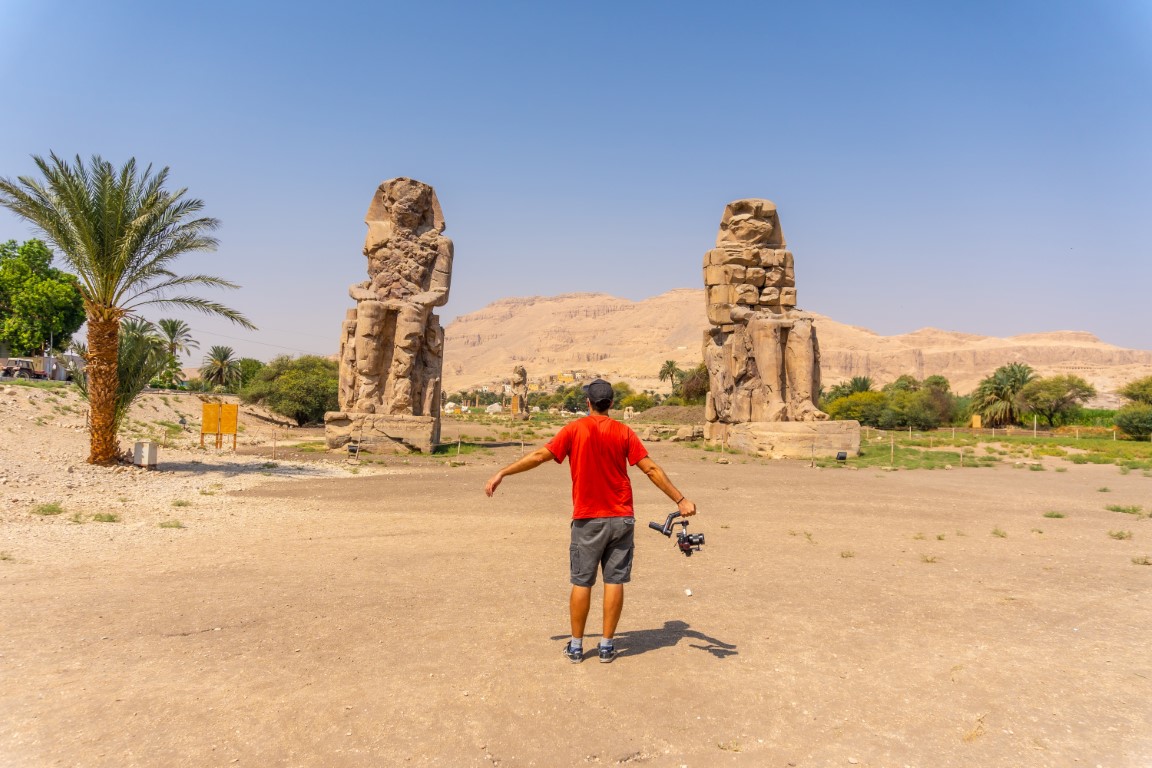
The statues stand close to the road and work well as a brief photo stop.
You can see them, hear an explanation and continue.
Not every attraction requires a full relationship and lunch together.
How Much Time Is Needed at Karnak?
Allow roughly 75 to 100 minutes.
Karnak is a large temple complex, not one small building.
A cruise visit usually focuses on:
the main entrance,
the Great Hypostyle Hall,
selected obelisks,
central courtyards,
and key historical explanations.
You will not see every part during a short Safaga day.
Nobody should promise that you will.
A good guide selects the most useful areas for your group and available time.
A poor timetable attempts everything, speaks at high speed and begins checking the clock after 40 minutes.
Should Luxor Temple Be Added?
Luxor Temple is impressive.
It should not automatically be added to a one-day itinerary that already includes the Valley of the Kings, Hatshepsut, the Colossi and Karnak.
An extra temple also means:
more driving,
parking,
entrance procedures,
walking,
sightseeing,
and a later return departure.
Luxor Temple may fit when:
the ship stays overnight,
the port call is unusually long,
another site is removed,
or the tour is deliberately limited to fewer places.
It should not be added simply because the package title looks better.
Four well-visited sites are often better than six places mainly viewed through the vehicle window and behind a guide who is walking too quickly.
Lunch: Restaurant or Packed Meal?
A lunch stop of around 40 to 50 minutes is practical for many groups.
Check:
whether food is included,
whether drinks cost extra,
buffet or set menu,
vegetarian availability,
allergy arrangements,
and planned duration.
Lunch should provide rest.
It should not become a ninety-minute stop involving several sales offers.
During a tight port call, a packed meal or simpler restaurant may be the better choice.
The day should not begin quietly asking for help between the starter and dessert.
Does the Drive Need a Break?
A short toilet and drink stop may be useful during a journey of more than three hours.
Ten to twenty minutes is normally enough.
Clarify whether the stop is:
a genuine rest break,
petrol station,
café,
or planned shopping visit.
A break is useful.
A 45-minute souvenir stop on both journeys is something different.
If you do not want shopping stops, state:
“Please include only necessary toilet and drink breaks. We do not want workshop, papyrus, perfume or souvenir stops.”
When Must the Return Journey Begin?
The exact time depends on all aboard.
Example:
All aboard: 9.30 pm
Desired port arrival: no later than 7.45 pm
Planned drive: 3 hours 15 minutes
Additional road reserve: 30 minutes
Latest departure from Luxor: around 4 pm
A 5.30 pm departure would not be brave planning.
It would be unnecessary risk.
The guide should treat the return departure as fixed.
If the day falls behind, a sightseeing stop must be shortened.
Not the safety margin.
Which Stops Should Be Removed First?
A good plan decides this before departure.
For example:
Shopping stop removed
Lunch shortened
Colossi stop reduced
Extra tomb removed
Luxor Temple not added
Karnak limited to key areas
The following should not be reduced:
safe driving time,
safety margin,
necessary health breaks,
or road safety.
The answer to a late start should not be:
“The driver will simply go faster.”
A cruise timetable does not turn road rules into optional suggestions.
What If Disembarkation Is Heavily Delayed?
A 30-minute delay may be manageable.
A delay of two or three hours requires a full review.
Options include:
visiting fewer sights,
choosing a nearer excursion,
or cancelling when safe return is impossible.
The operator should explain the revised plan before leaving.
They should not promise the original full itinerary and hope the missing time reappears.
Time regularly disappears during travel.
It rarely grows back.
How Large Should the Return Margin Be?
There is no single number for every ship.
For such a long road excursion, the planned return should be clearly before all aboard.
A margin of only 20 or 30 minutes is too small.
Many private plans aim for at least 60 to 90 minutes, and more may be sensible depending on the day.
The planned port arrival should appear in writing.
“Do not worry, we will return you on time” is friendly.
A specific clock time is more useful.
Questions to Ask Before Booking Luxor
Ask:
How long does the drive genuinely take?
Which sights are fixed?
How long is planned at each?
When does the return drive begin?
What time should we reach Safaga?
How large is the margin before all aboard?
Which stops are removed after a delayed start?
Are guide, entrance fees and lunch included?
Are shopping stops included?
Who monitors the ship time?
What happens after a vehicle breakdown?
Is a replacement vehicle available?
The answers should work together.
A company cannot realistically promise:
late collection,
five major sights,
relaxed lunch,
several shopping stops,
flexible free time,
and an especially early return.
The time must exist somewhere in the day.
WhatsApp Enquiry for a Private Luxor Tour
“Hello, we will arrive in Safaga on [date] aboard [ship name]. The port stay is from [time] to [time], and all aboard is at [time]. We are [number] passengers and would like a private Luxor tour. We would like to visit the Valley of the Kings, Hatshepsut Temple, the Colossi of Memnon and Karnak with a [German-speaking/English-speaking] guide. Please send a detailed timetable, planned departure from Luxor, port return time, safety margin, included tickets, vehicle type and total price. We do not want shopping stops.”
Suggested WhatsApp Button
Button text:
Ask About a Private Luxor Tour from Safaga
Text above the button:
Send your ship name, port times and all-aboard time. We will check which Luxor itinerary is possible with a safe return margin.
Which Luxor Attractions Are Worth Including During a Short Port Call?
The quality of a Safaga to Luxor cruise excursion is not decided by the number of stops.
It depends on whether you can visit the important places without constant rushing.
For most guests, this combination works well:
Valley of the Kings,
Hatshepsut Temple,
Colossi of Memnon,
Karnak Temple,
and a carefully timed lunch.
This covers both banks of Luxor and includes tombs, temples and monumental statues.
Valley of the Kings
The standard ticket normally includes several open tombs. The exact selection may change.
Some famous tombs require additional tickets.
Before booking, ask:
which tombs are included,
which cost extra,
whether extra tickets can be arranged,
and how many tombs can realistically be visited.
During a limited port call, three well-chosen tombs are often enough.
Another tomb adds time, walking and possible queues.
Hatshepsut Temple
The temple’s cliffside setting and terraces make it especially memorable.
It fits naturally with the Valley of the Kings.
Guests with limited mobility should discuss ramps, steps and open walking areas in advance.
You do not need to visit every section to have a worthwhile experience.
Colossi of Memnon
The Colossi work well as a short photo stop.
Ten to fifteen minutes is often enough.
A longer visit rarely adds much during a tight itinerary.
Karnak Temple
Karnak is one of the main highlights.
The complex is large, so the visit should focus on the most important areas.
Allow proper time for the Great Hypostyle Hall and key historical explanations rather than rushing through the full site.
Is Luxor Temple Worth Adding?
Yes, but not automatically.
It may fit when:
the ship stays overnight,
the port call is very long,
another attraction is removed,
or the route focuses on the east bank.
It should not be pushed into an already full day.
What Should Be Removed First When Time Is Short?
Remove:
Shopping stops
Extra tombs
Long photo sessions
Luxor Temple as an additional visit
Extended free time
A long restaurant lunch
For many visitors, the Valley of the Kings and Karnak remain the two most important stops.
The safety margin should not be removed.
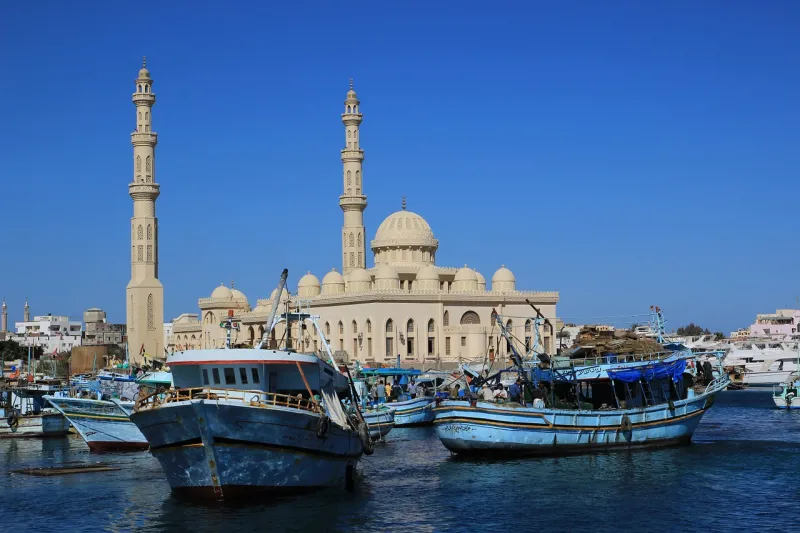
Private shore excursion to Hurghada & El Gouna from Safaga with a German-speaking guide. Discover the marina, lagoons & city highlights. Free consultation.
From
Cairo from Safaga Port: When Is It Genuinely Possible?
Cairo is one of Egypt’s most famous destinations.
Many passengers want to see the Pyramids of Giza, the Sphinx and a museum.
From Safaga, Cairo is much farther away than Luxor.
A standard same-day road journey takes too much of the available time during a normal port call.
An operator who immediately promises a relaxed Cairo day without first checking your ship schedule should be questioned carefully.
When May Cairo Be Considered?
It may be examined when:
the ship remains for a very long time,
there is an overnight call,
a domestic flight from Hurghada works,
airport transfers are organised,
flight changes are considered,
and a large return margin remains.
The plan becomes more complex than Luxor.
It may include:
Safaga to Hurghada Airport,
check-in and security,
flight,
Cairo traffic,
sightseeing,
return flight,
Hurghada to Safaga,
and possible delays.
A flight reduces the road distance.
It does not remove every risk.
When Should You Avoid Cairo?
Do not book Cairo when:
the ship has a normal daytime call,
the return depends on a tight flight connection,
there is no backup for flight changes,
the planned port return is close to all aboard,
or no full timetable is provided.
“We always manage” is not a timetable.
Ask for:
port collection time,
airport arrival,
flight departure,
landing time,
sightseeing start,
return flight,
Safaga return,
and safety margin.
If one of these is missing, the plan is not complete.
Better Alternatives During a Short Call
Luxor is usually the stronger historical choice for a one-day Safaga visit.
For shorter calls, consider:
Safaga or Hurghada city tour,
beach day,
boat excursion,
snorkelling,
desert tour,
or El Gouna.
Not every port call needs to win a prize for distance travelled.
A well-planned nearby excursion may be more enjoyable than a day spent mainly in vehicles, airports and looking at the time.
Which Excursion Fits Your Port Stay?
Fewer Than Eight Hours
Luxor is normally unsuitable.
Choose:
Safaga,
Hurghada,
beach,
snorkelling,
a short boat trip,
or a compact desert tour.
Eight to Twelve Hours
A full Luxor day is very tight and may be unsuitable.
A nearby excursion is usually better.
If Luxor is offered, request a detailed timetable.
Twelve to Fourteen Hours
Luxor may be possible, but the schedule will be strict.
Limit the route to the main attractions.
Long lunches, shopping stops and extra temples normally do not fit well.
Fourteen to Sixteen Hours
This works much better for a classic Luxor day.
The Valley of the Kings, Hatshepsut, the Colossi, Karnak and lunch may fit when collection begins on time.
A clear return margin is still required.
Overnight Port Stay
More options become possible.
You may consider:
a slower Luxor visit,
extra temples,
an overnight stay,
or a carefully checked Cairo plan.
More time gives more freedom.
It should not all be filled.
An overnight call is not permission to remove every safety margin.
Prices and Inclusions for Private Safaga Shore Excursions
The price depends on:
group size,
vehicle,
destination,
guide language,
entrance tickets,
lunch,
duration,
port collection,
and extra services.
A price comparison works only when the packages include the same things.
What May Be Included?
A private Luxor package may include:
Safaga Port collection,
private air-conditioned vehicle,
driver,
fuel,
return journey,
licensed guide,
entrance tickets,
lunch,
water,
parking,
and required permissions.
Ask for a written list.
“Complete package” sounds attractive.
A detailed list is more useful.
Possible Extra Costs
These may include:
special tomb tickets,
drinks,
extra temples,
Nile boat trip,
tips,
shopping,
photography fees where applicable,
and services outside the agreed itinerary.
Ask:
cash or card,
accepted currency,
deposit or full payment,
and possible fees.
The driver should not wait until Luxor to explain that the agreed price covered only the outward journey.
That would be a very unusual moment for creative pricing.
Price per Person or per Vehicle?
Some operators charge per person.
Others charge a total group price.
Check:
vehicle capacity,
luggage space,
comfort,
air conditioning,
child seats,
and whether the guide travels in the same vehicle.
Six adults may technically fit.
Whether they still consider it comfortable after three hours is another question.
Is a Deposit Normal?
A deposit is not unusual.
Before paying, obtain:
company name,
written confirmation,
service list,
total price,
cancellation conditions,
missed-port policy,
and contact details.
Do not pay only because somebody sent a bank number in a short message.
A professional booking should be documented professionally.
Safety, Return Margin and Vehicle Breakdown
A backup plan should form part of a long Safaga Port excursion.
It does not mean something will go wrong.
It shows the operator has thought about what happens if it does.
Questions About Vehicle Failure
Ask:
Is there an emergency contact?
Can a replacement vehicle be sent?
What happens after a breakdown on the outward journey?
When is the route shortened or cancelled?
Who informs local contacts?
Is the operator reachable throughout the day?
A replacement vehicle cannot appear instantly.
The company should still explain its process.
“The driver understands cars” is not a complete emergency plan.
Who Watches the Time?
Driver and guide should both know all aboard.
Confirm it again in the morning.
Save it yourself as well.
Do not assume every person has read the same office message.
The return departure should remain fixed.
Passengers may request changes.
The deadline still controls the day.
What If Traffic Becomes Heavy?
Less important stops should be removed early.
The driver should not try to recover lost time through unsafe speed.
A reliable company reacts before the situation becomes urgent.
It does not wait until everybody is already nervous.
Safaga Shore Excursions for Families
A private excursion may give families more flexibility than a coach tour.
The day remains long.
Consider the children’s ages and tolerance for long journeys.
What Families Should Confirm
Ask:
Is a suitable child seat available?
What type?
Does a pushchair fit?
Is there space for bags?
Can the route be shortened?
Are toilet stops flexible?
Is child-friendly food available?
How long are the drives?
State each child’s age.
“We are travelling with children” is not enough.
A two-year-old and a twelve-year-old need very different planning.
Is Luxor Suitable for Young Children?
It can work when:
the child handles long drives,
a correct seat is available,
the programme is limited,
water and snacks are carried,
and rest is possible.
The drive remains the hardest part.
A private vehicle makes it more flexible.
It does not make it shorter.
Which Stops Are Easier for Families?
Often easier:
the Colossi of Memnon,
selected parts of Karnak,
shorter west-bank visits,
private lunch,
and fewer carefully chosen stops.
Multiple tombs, strong heat and many stairs can quickly tire small children.
A child who looks unimpressed after the second temple has not rejected ancient Egypt.
They may simply have been awake since 5 am.
Safaga Excursions for Older Guests and Limited Mobility
Private tours can often be adapted.
The operator needs precise information.
Explain:
walking ability,
use of a stick, walker or wheelchair,
stair difficulties,
vehicle-entry needs,
need for regular breaks,
and health concerns.
Which Places Are More Demanding?
The Valley of the Kings may involve:
uneven ground,
long paths,
sloping tomb entrances,
and heat.
Hatshepsut Temple includes ramps, steps and open areas.
Karnak is large and requires walking.
The Colossi are generally easier.
A guide may adjust the programme through:
fewer tombs,
shorter routes,
more seated breaks,
slower explanations,
and closer access where available.
Do not promise that every ancient site is fully accessible.
An honest description is more useful than a friendly but inaccurate “No problem”.
Which Vehicle Is Suitable?
Check:
entry height,
door width,
wheelchair or walker space,
internal steps,
air conditioning,
and seating comfort.
Ask for a photograph of the actual vehicle class.
“Modern minivan” may describe many very different vehicles.
What Should You Take on a Safaga Shore Excursion?
A Luxor day is long.
Pack lightly but sensibly.
Take:
passport or required ship documents,
cruise card,
booking confirmation,
phone numbers,
power bank,
water,
snacks,
sun cream,
sunglasses,
hat,
light clothing,
comfortable shoes,
tissues,
wet wipes,
medication,
and some cash.
Save offline:
meeting point,
driver name,
registration number,
booking number,
return time,
and emergency contact.
Clothing for Luxor
Wear:
light clothing,
comfortable shoes,
covered shoulders in strong sun,
and a hat.
Winter mornings can be cool.
Carry a light jacket or jumper.
It may spend the afternoon inside your bag.
That does not mean it was unnecessary at 6 am.
Do You Need Cash?
Small notes are useful for:
tips,
drinks,
toilets,
small purchases,
and extras.
Ask which currencies are accepted.
Do not carry all your holiday money openly.
How to Recognise a Reliable Private Operator
A responsible operator should:
ask for ship and port times,
check all aboard,
explain the meeting point,
give realistic journey times,
state a planned return,
list inclusions,
remove shopping stops when requested,
provide a reachable contact,
and explain its missed-port policy.
Warning Signs
Be cautious when:
every route is confirmed regardless of port time,
Cairo is described as easy during a short call,
no planned return time is given,
the meeting point is only “outside the port”,
entrance fees remain unclear,
no written confirmation is offered,
or questions about the safety margin are avoided.
A very low price may also indicate missing services.
Cheap and incomplete are not the same thing.
They simply meet each other remarkably often.
WhatsApp Enquiry: Information the Operator Needs
Send:
ship name,
date,
arrival,
departure,
all aboard,
number of adults,
children’s ages,
destination,
guide language,
mobility needs,
preferred attractions,
and whether you want no shopping stops.
WhatsApp Template for Luxor
“Hello, we will arrive in Safaga on [date] aboard [ship name]. The port stay is from [time] to [time]. All aboard is at [time]. We are [number] adults and [number] children aged [ages]. We would like a private Luxor excursion with a [German-speaking/English-speaking] guide. We would like to visit the Valley of the Kings, Hatshepsut Temple, the Colossi of Memnon and Karnak. Please confirm the meeting point, vehicle type, inclusions, total price, planned departure from Luxor and port arrival. We do not want shopping stops.”
WhatsApp Template for Cairo
“Hello, we will arrive in Safaga on [date] aboard [ship name]. The port stay is from [time] to [time], and all aboard is at [time]. We are interested in Cairo and the Pyramids. Please first check whether the excursion is possible by flight or with an overnight stay and a safe return margin. Send a full timetable including transfers, flights, return time and a backup plan for delays.”
Suggested WhatsApp CTA
Text above the button
Send your ship name, date and exact port times. We will check which private Safaga shore excursion fits your call with a safe return to the ship.
Button text
Ask About a Private Safaga Shore Excursion on WhatsApp
Frequently Asked Questions About Cruise Excursions from Safaga Port
How Far Is Luxor from Safaga Port?
The drive usually takes around three to three and a half hours each way.
Traffic, checks, stops and the precise meeting point may add time.
Luxor should therefore be planned only during a long port stay.
Is One Day Enough for Luxor?
It can be when the ship stays long enough.
The route should remain focused on the main sights and include a clear safety margin.
Can I Visit Cairo in One Day from Safaga?
A road trip is not sensible during a standard daytime call.
Cairo should be considered only during a very long or overnight stay with carefully checked flights, transfers and return times.
Where Does the Driver Wait?
The meeting point depends on the ship, berth, terminal and current port rules.
Ask for the exact exit, sign, driver name, telephone number and preferably a map point.
Can the Driver Wait Beside the Ship?
Only if the operator has permission to enter that area for your particular call.
Do not accept this as a general promise without confirmation.
What Happens If the Ship Is Cleared Late?
Tell the operator immediately.
A small delay may be handled by shortening the route.
A major delay may make Luxor unsafe to attempt.
What Happens If Safaga Is Cancelled?
The cancellation terms should state whether a deposit is returned or the booking is cancelled without charge.
This should be confirmed before payment.
Is a Private Tour Safer Than a Cruise-Line Excursion?
Not automatically.
Reliability depends on the operator, vehicle, driver, timetable and return margin.
A cruise-line tour is directly coordinated with the ship.
A private excursion requires stronger independent return planning.
Will the Ship Wait for a Private Excursion?
You should not assume so.
Private passengers are responsible for returning on time.
How Early Should a Private Tour Return?
The planned port arrival should be clearly before all aboard.
A margin of only a few minutes is unsuitable.
Do I Need a Guide in Luxor?
A licensed guide is very helpful for understanding the temples and tombs.
Check whether one is included and which language they speak.
Can the Driver Also Be the Guide?
A driver does not automatically provide a licensed historical tour inside the sites.
Confirm whether a qualified guide is included.
Are Entrance Tickets Included?
It depends on the package.
Ask about standard admission, special tombs, extra temples and additional fees.
Can I Refuse Shopping Stops?
Yes, on a private tour you can request no workshop, papyrus, perfume or souvenir visits.
Ask for written confirmation.
Is Luxor Suitable for Children?
It can be when children tolerate long drives and the day is adapted.
Child seats, breaks, snacks, shade and fewer stops are important.
Is Luxor Suitable for Limited Mobility?
Parts of the programme can be adapted.
Some sites include uneven paths, stairs and longer walking distances.
Explain mobility needs before booking.
What Should I Wear?
Light clothing, comfortable shoes, a hat and sun protection are suitable.
In winter, take a light jacket for the early departure.
Can I Book by WhatsApp at Short Notice?
A last-minute enquiry is possible, but vehicles, guides and port access should be checked early.
Send the ship, date, port times and group size immediately.
“Luxor tomorrow?” leaves several important questions unanswered.

Final Thoughts: Private Safaga Excursions Need Freedom and a Fixed Timetable
Private cruise excursions from Safaga Port can be more personal, calmer and more flexible than a large coach tour.
You can travel with your own group, book a private guide and adjust the route for children, older guests or personal interests.
That freedom works only with clear planning.
Before booking, confirm:
exact meeting point,
actual collection time,
vehicle and guide,
included services,
return departure,
planned port arrival,
safety margin,
and reachable emergency contact.
Luxor is the most realistic and important historical destination during a long Safaga call.
The Valley of the Kings, Hatshepsut Temple, the Colossi of Memnon and Karnak create a strong route without overloading the day.
Cairo requires much more time and should be confirmed only after an honest review of flights, transfers, port times and backup options.
The best private shore excursion is not the one with the largest number of stops.
It is the one that allows you to experience Egypt calmly and return long before the final gangway.
Send your ship name, date, port times and all-aboard time by WhatsApp before booking.
That makes it possible to check which route genuinely fits your call.
A good Safaga shore excursion begins with a clear plan.
It should not end with a race back to the ship.